

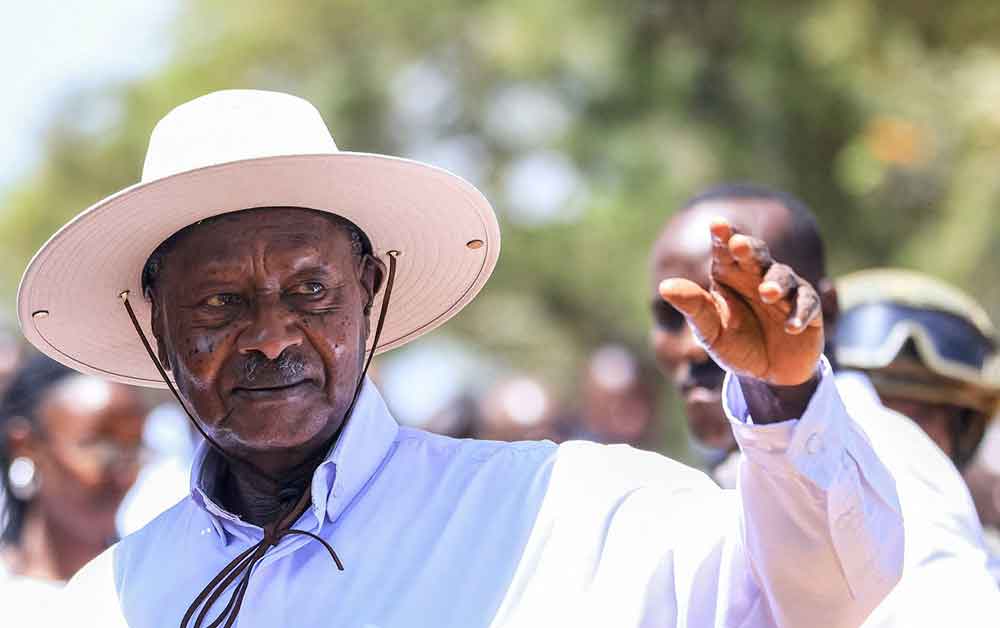

President Museveni’s new Cabinet, tasked with delivering his agenda over the next five years, blended young Turks and the old guard—experienced politicians and greenhorns —as vital cogs in his ambition to grow the economy to the lofty heights of $500bn by 2040. To achieve such a great leap forward and equal Norway’s current GDP, which is slightly above $500bn, Uganda would need to grow exponentially at 14.7 percent annually for the next 14 years.
There were a few surprises, as the Cabinet appointments followed the pattern of a medieval king awarding plum positions to his most obsequious servants in his orbit. The president, who is 81 years old, defied conventional wisdom when he declined to name a cabinet, which could have placed the country on the path of a smooth succession trajectory, a cornerstone of a peaceful transfer of power.
The President returned loyal cadres, Jessica Alupo and Robinah Nabbanja, to the dockets of Vice-President and Prime Minister and leader of government business, respectively, but stirred the hornet’s nest when he named acolytes of his son, Gen Muhoozi Kainerugaba’s political outfit, Patriotic League of Uganda (PLU), to minor cabinet roles, planting doubt amongst the exponents of the father-son dynastic succession.
However, Balaam Barugahara, one of the most visible faces of PLU, was elevated from the docket of junior minister for Youth and Children Affairs, to head the Local government ministry in the Cabinet.
The President was ‘pragmatic’ in his appointments by extending his magnanimity to the offspring of his comrades.
Museveni renewed the commitment of a secretive bush-war pact with his outgoing and ailing deputy Premier, Moses Ali, by appointing his son, Siraji Musa Ali, as the state minister for Works. Jaqueline Mbabazi, the wife of former Prime Minister Amama Mbabazi, benefited from the thaw in relations between the president and his erstwhile ally.
Charlie Ayume, the son of former Speaker Francis Ayume, Shartsi Kutesa Musherure, the daughter of former Foreign Affairs minister and in-law to the President, Sam Kutesa, and Justine Nameere, the daughter of former Defence minister Vincent Ssempija, were rewarded through their kinship.
Crispus Kiyonga, a comrade of the President who won the only seat of the Museveni-led Uganda Patriotic Movement (UPM) in Kasese North during the 1980 election, returned from the cold. He was appointed second deputy premier and will deputise Nabbanja as Leader of Government business. Adonia Ayebare, a former journalist and Uganda’s Permanent Representative to the UN who has steadied the ship in turbulent diplomatic waters, was handed the powerful Foreign Affairs docket.
Fred Byamukama, who previously served as junior minister, was appointed as Works and Transport minister. Kiryowa Kiwanuka, who is part of the inner-sanctum, was moved from the docket of the Attorney General to the powerful Defence docket while Sam Mayanja, previously the junior Lands minister, replaced Kiryowa as Attorney General.
Dr Monica Musenero remained in the president’s good graces when she was named to head the sensitive Energy ministry barely a year before Uganda pumps its first barrel of oil from the Albertine Graben, while Henry Musasizi was elevated from a junior role to head the powerful Finance docket. Former Tororo Municipality MP, Sanjay Tanna, was appointed as the first Ugandan of Indian origin in the NRM government, weaving the country’s diversity into the national fabric. His son, Shyam Tanna, was elected as Tororo Municipality MP.
Prof Ephraim Kamuntu, retired Lt. Gen. Henry Tumukunde, and Sam Engola bounced back in Cabinet and were appointed to the dockets of Internal Affairs, Gender, Labour, and Social Development, and Disaster Preparedness, respectively.
Norbert Mao, the Democratic Party leader, kissed the ring and returned to the Justice ministry docket, and Betty Among, the wife of Jimmy Akena, the rebellious UPC party leader, was cast aside and dropped from the Gender, Labour and Social Development position.
Chris Baryomunsi, a medical doctor, swapped places with his professional colleague, Jane Ruth Aceng. Baryomunsi was appointed the Health minister while Aceng was appointed to the Information, Communication & Technology docket.
The new cabinet will be confronted with the youth bulge and the unemployment crisis, in a country with the second-youngest population in the world.
The President promised to wage a war on corruption barely after the NRM policy organ, the Central Executive Committee (CEC) dropped Annet Anita Among from the coveted Speaker of Parliament position on the basis of graft, about a fortnight ago.
Anti-corruption agencies and the police’s Criminal Investigations and Intelligence Directorate (CIID) must be empowered and given autonomy to pursue the corrupt without the selective application of the law, and must not cede ground to sacred cows, if the government intends to halt runaway corruption.
There is a need to restore the rule of law, end the weaponisation of law enforcement, reinstate the independence of the judiciary, and allow Parliament to play its oversight role.
Investments should be geared towards the most productive sectors of the economy and value addition—the president’s pet subject should be prioritised. Uganda’s current debt stands at $34 billion, placing the debt-to-GDP ratio at 52 percent. If debt is not brought under control, it could push the country into a debt trap and a financial chokehold, which could halt funding to vital sectors such as health, education, and other social programmes.