

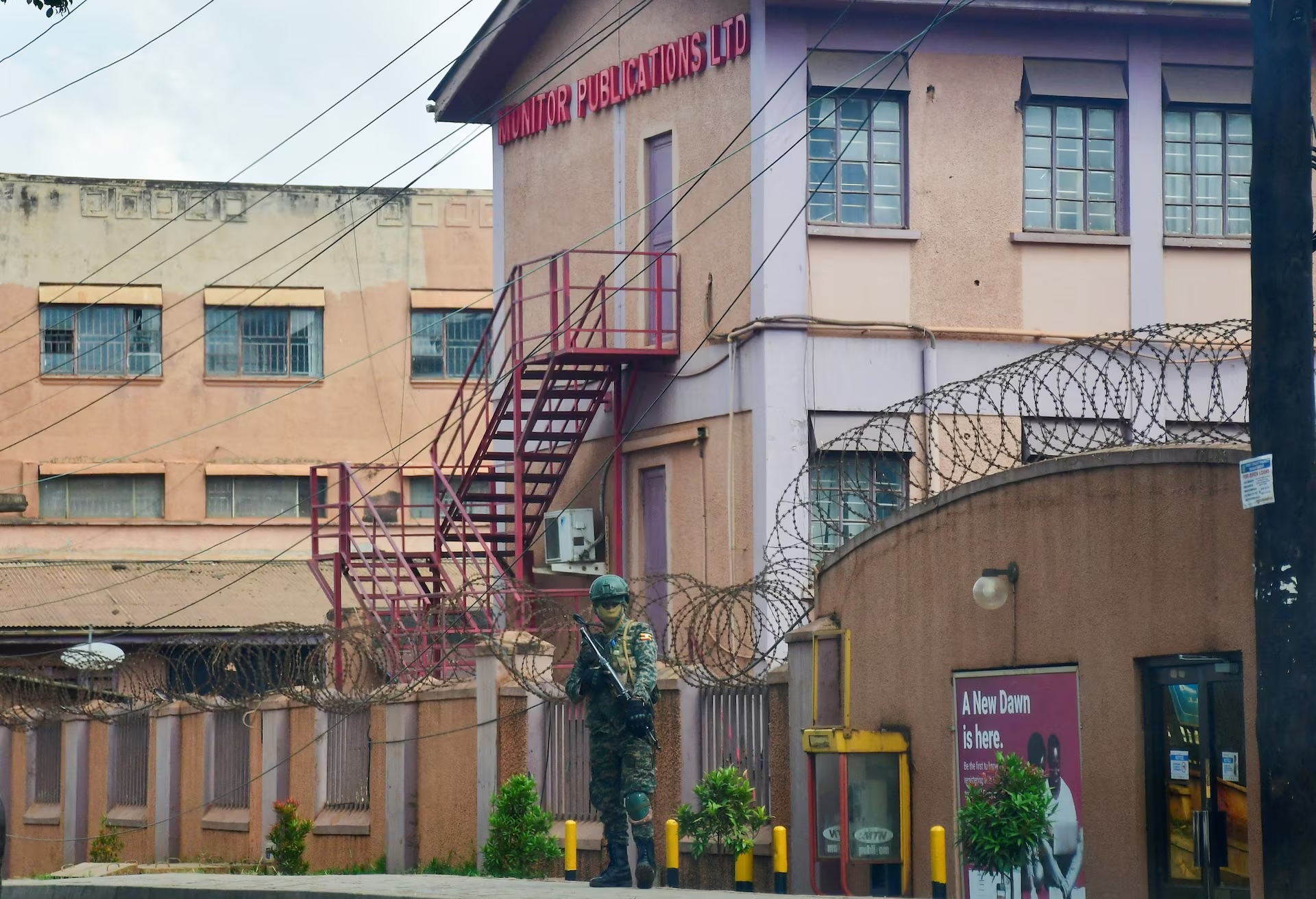

The sentries remain stationed at Nation Media Group-Uganda premises in Namuwongo and Serena Conference Centre, a fortnight after it was closed, bringing operations of the Daily Monitor, NTV Uganda, KFM, Dembe FM, Spark TV, and digital platforms to a shuddering halt.
This is after the ICT minister, Justine Kasule Lumumba, revealed that the shutdown was sanctioned by the President to allow security personnel to conduct an inquiry. The statement did not reveal what prompted the search or when NMG-Uganda would be reopened.
A week after the closure, NMG’s majority shareholder, Rostam Aziz, jetted into the country and held talks with the Chief of Defence Forces, Gen. Muhoozi Kainerugaba, in Entebbe. According to highly placed sources, Muhoozi accused the media house of being a platform for activist propaganda and bias. He presented several Daily Monitor newspaper articles and television stories of the vernacular bulletin Akawungeezi to prove his allegations.
The talks focused on reopening the media house, but no clear timelines were provided. In the past, the government has twice closed Daily Monitor and NTV-Uganda, on one occasion barely after it commenced operations in Uganda in December 2006. Past negotiations to reopen Daily Monitor and NTV involved a compromise. Charles Onyango-Obbo, the Managing Editor, and Conrad Nkutu, the Managing Director of the Monitor, were compelled to resign and were assigned new roles at the media house’s head office in Nairobi.
An independent media house that serves as the repository of Uganda’s history and major political moments since its inception in 1992, NMG has built a reputation for bold reporting. But the latest closure represents a renewed clash between the unfettered powers of a state and the shrinking media space. Media watchdogs warned that the closure has stymied informed public debate and accountability and created a climate of fear for potential investors. NMG-Uganda employs hundreds of employees who remain stranded at home during the closure.