

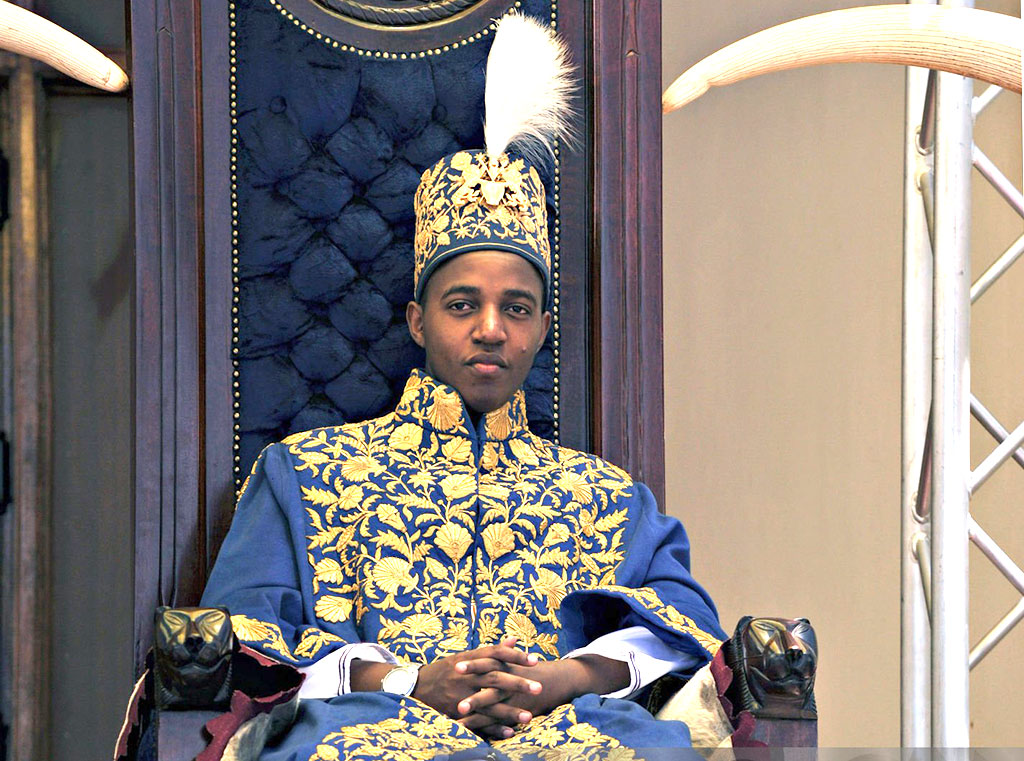

No vignette best encapsulates and humanises the pacifist stance that Tooro’s fallen monarch Oyo Rukidi IV held as his reaction to a rugby tackle that Augustine Kasansula subjected him to when the two were Primary Four pupils at The Aga Khan Primary School. Sure enough, Kasansula would go on to competitively play rugby, standing at first centre in many matches for Uganda’s oldest club, KOBs Rugby, but on this occasion he was playing football. Oyo, significantly bigger than Kasansula, could have blown a gasket. He could have even thrown the proverbial toys out of the pram on account of the desecration of royalty. Yet, even at such a tender age, he chose to rely heavily on emotional restraint and strict public decorum. He chose to hug Kasansula.
The vignette must have been the last thing on the mind of Princess Ruth Komuntale when, speaking to local media in Uganda this past week, she asked that Ugandans “remember my brother’s legacy: He led in peace and harmony.” Komuntale, who was also at The Aga Khan Primary School, albeit a few classes ahead, when Oyo acted in peace and harmony after Kasansula rugby tackled him, described as “a very humble man” her brother who lost his battle to cancer on August 27. He was just 34. The untimely death has set in motion a succession battle as Tooro awaits its sixteenth monarch.
“I don’t want these evil vultures to come and steal what he [Oyo] worked for,” Komuntale said in a no-holds-barred interview with local media in Uganda this past week, adding, “[…] stop this evil drama!”
Tooro power politics
The people Komuntale finds distasteful are not entirely unbeknownst to her. She was unhappy and indignant about the attacks on her brother’s kingship that some of the top decision makers in the Babiito clan appear to have settled into. The clan has played a central role in giving a seal of approval to Tooro kings since the 1830s when, with Nyarwa—their leader—in tow, a bunch of Babiito of the Ababoyo group crowned Kaboyo with the title Olimi I in present day Bunyangabu county. It is estimated that nearly two decades had passed since Kaboyo outfoxed his father—Nyamutukura Kyebambe III—to secede from Bunyoro-Kitara and found Tooro.
Since then members that occupy the top echelons of the clan have made themselves indispensable to power politics in Tooro. This has made them revered and reviled in almost equal measure. Recent goings-on following the passing of Oyo have particularly led some to consider Charles Kayondo Kamurasi—the 80-year-old head of the Babiito clan or the omusuuga—an intriguing but enigmatic figure. His own sons—the princes Patrick Mpuuga and Solomon Nyaika—called him out for the role he played in convening a 21-member committee meeting of Babiito that named prince Edward Kiijanangoma as the kingdom’s next king. Kiijanangoma will take on the title of Nyabongo II, Fr. Charles Oyo, one of the committee members said after the vote on Wednesday.
“We stand with [Oyo]. We know he left a will. That will is expressly clear on the way forward for continuity. […]We disagree with our own father. His position is very surprising […] It is very clear that the will of the king now supersedes any will from the past,” Mpuuga said, adding that in his last days Oyo was contemplating handing him the omusuuga reins after yanking them from Kamurasi.
Kamurasi’s other son, Nyaika, was just as unsparing in his criticism. If not more. In no uncertain terms, he said: “A king is not voted, for heaven’s sake. […] These are enemies of King Oyo. They have been here thirty-one years ago, they’re now back. If you count the 21 members, these are people who disturbed Oyo thirty-one years ago when he was going to be enthroned. They’re now back. […] Musuuga was hijacked by all these people in [dog] collars […].”
Historical perspective
For some, the fallout, especially amongst family members, is remarkable if not for the cinematic feel then the fact that kin are expected to be closely knit. But historians will be quick to point out that deep-seated divisions amongst Tooro’s royals are anything but novel. The profound fissures amongst Olimi I’s sons are well documented. There is a great degree of instructiveness to the jostles for power between Kazana Ruhaga I, the kingdom’s second monarch, and Nyaika Kasunga Kyebambe I, the third and fifth Omukama of Tooro. Both brothers got achingly close to killing the other before Nyaika finally managed to land a telling, if devastating, blow.
Nyaika’s title—Kyebambe or usurper—spoke to the fact that he wrested the crown from the grip of his elder half brother. He would by no means be the last. Mukarusa, Tooro’s seventh monarch and son of Kahoraho of the Abafunjo clan, took on the title of Kyebambe II. The kingdom’s ninth Omukama, Rububi, was officially known as Kyebambe III. Last, but by no means least, is Kasagama who reigned from 1891 to 1928 under the title Kyebambe IV.
Kyebambe IV is, however, best remembered for his dogged determination to impress upon Tooro the faith and practices of the Anglican Christian Churches. His lasting legacy is such that all monarchs that followed him have been eulogised in an Anglican Church. This explains why the omuguta (corpse) of Oyo was taken to St. John’s Cathedral where Tooro’s 15th monarch learnt the ropes of Anglicanism. During the funeral service on Saturday, Oyo’s mother—Best Kemigisa struck a conciliatory tone, giving the indication that she had thawed out sufficiently to allow a cordial working relationship with her arch-nemesis—the Babiito clan under Omusuuga Kamurasi’s care.
Oyo’s last will
Earlier, Komuntale, whilst “think[ing] about the person behind the crown”, had eulogised Oyo for “often act[ing] as though he was the oldest sibling” in their household. Tooro’s 15th monarch largely lived an incident-free life, health wise, famously taking 10 days to scale Mount Rwenzori in August of 2022. A gym junkie, he had a high pain threshold.
But when a sharp pain to the left side of his body proved to be persistent, he sought medical intervention. After a battery of tests failed to put the issue to bed, a cancer diagnosis was made in October of 2025 in the Kenyan capital of Nairobi.
“In mid July of 2026, things took a turn for the worst,” Komuntale told mourners on Saturday.
At the back-end of August, Oyo took his last breath in a Dallas hospital. Against her better wishes and judgment, Kemigisa was barred from getting to the Karambi Royal Tombs to bury her son. It is thought that she harboured intentions of stopping Nyabongo II, the Omukama-designate, from performing part of the rituals meant to kick-start his reign.
“When the issue of the new king of the Batooro is solved, we shall be happy to work with the king as we did with His Highness Oyo,” President Museveni said in a message read by Thomas Tayebwa, the Deputy Speaker of Parliament, at St. John’s Cathedral.
More than anything, that is a telltale sign that a long, drawn-out succession battle beckons. Not on the kingdom’s soils, as was so often the case in the nineteenth century, but rather between the four walls of a courtroom. Sam Mayanja, Uganda’s Attorney General, in his legal counsel to President Museveni on the succession question in Tooro made it abundantly clear that Oyo’s last will, reported to have been written in 2022, cannot be wished away.
“The importance attached to the will of a former King can be discerned from decided cases in Uganda where a will of a former King was held as being critical in determining who an heir to the kingdom may be determined,” the Attorney General opined in his 12 September letter to President Museveni.
Mayanja also decentred the Tooro succession question from the Institution of Traditional or Cultural Leaders Act.
“It is important to note that whereas in 1999 the Tooro Kingdom promulgated a Constitution, King Oyo suspended the observance of the same in 2013 for various reasons including the provisions of that Constitution contradicted the laws of Uganda. [The] court upheld the King’s suspension of the Constitution in George Kusemererwa Vs King Oyo,” the Government of Uganda’s chief lawyer wrote.
“Subsequently, the King set up a committee to review the Constitution. At the time of his demise, the Constitution had not been reviewed and as such the Constitution remains suspended […] King Oyo’s will should be followed. Its validity can only be challenged in the courts of laws,” he added.