

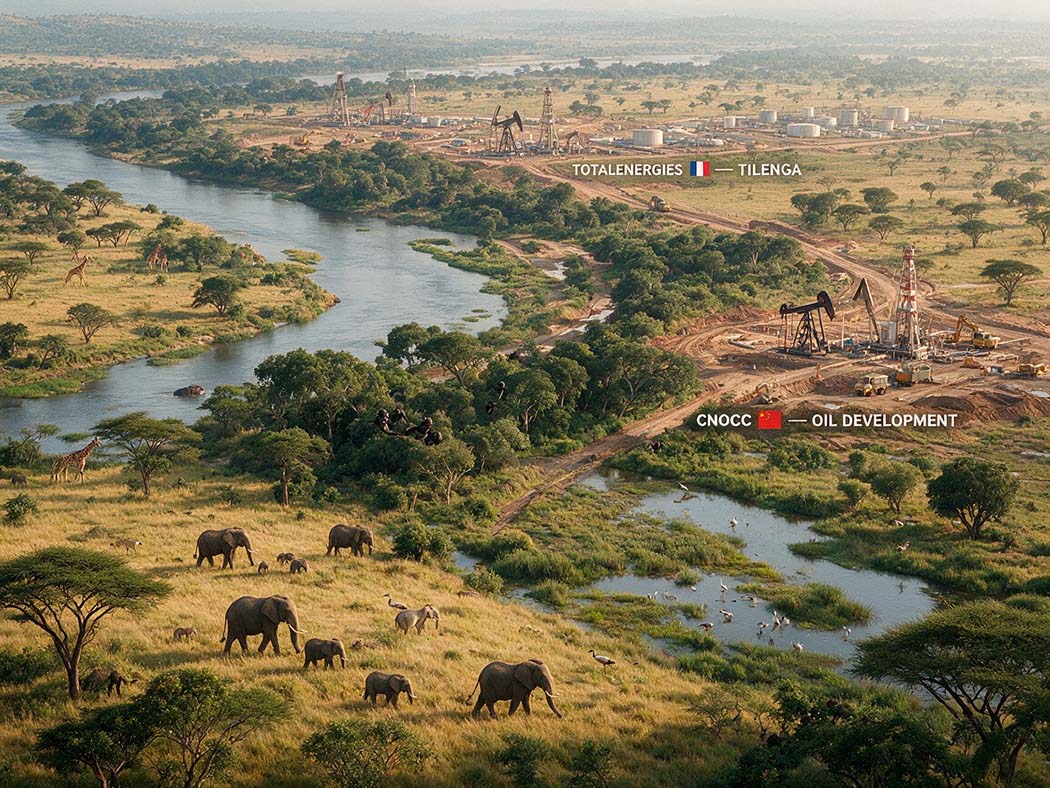

Uganda is expected to pump its first barrel of oil from the bowels of the Albertine Graben towards the end of 2026. The black gold could fetch as much as $69.7 billion by the end of its production lifespan in 2046, an estimate slightly higher than Uganda’s current GDP, estimated at $66 billion.
But the bulk of the petrodollars from the sprawling Albertine oil fields will be repatriated to the vaults of multinational oil titans.
These firms include the French-owned Total E&P Uganda, China National Offshore Oil Company (CNOOC), the East African Crude Oil Pipeline (EACOP), and the Swiss-based Vitol Group, whose subsidiary, Vivo Energies, plans to jointly develop Liquefied Petroleum Gas alongside the Uganda National Oil Company (UNOC).
Emmanuel Mutaizibwa, a 2026 Bertha Challenge Fellow spent two months in the Albertine Graben. He discovered that large chunks of ancestral lands, which previously served as farms and grazing fields for communities, had turned into a wasteland of corporate greed and profit. This evidence comes from Production Sharing Agreements (PSAs), Acts of Parliament, Environmental Impact Assessment reports, Resettlement Action Plans (RAPs), and contracts that granted oil companies disproportionate leverage over the government.
Total E&P Uganda relied on an intricate tax structure known as a Double-Tax Treaty or treaty shopping to avoid paying millions of dollars in taxes and prop up shareholder value.
Treaty shopping, which is part of tax avoidance, is the practice of routing investments or payments through an intermediary country to access a more favourable Double-Tax Treaty than would otherwise be available as a method of paying less withholding tax. These double tax treaties often entail reciprocal tax reduction. When third parties, for instance Total E&P Uganda, receive treaty benefits, such as reduced withholding tax (WHT) rates, it is referred to as tax treaty abuse.
The Memorandum and Articles of Association, a copy in the possession of Vox Populi, indicate how Total E&P Uganda was incorporated as a Dutch subsidiary to benefit from the Double-Tax Treaty between Uganda and the Netherlands. Total Energies SE, the parent company, is based in France, and if the oil behemoth had not incorporated a subsidiary in the Netherlands, it would have paid 15 percent withholding tax to the Ugandan government.
Total E&P Uganda did not respond to the queries in regard to this story.
A raw deal?
As a result of this golden bargain, a 2017 Oxfam report estimated that Uganda could lose as much as $287 million as a result of the Total E&P Double-Tax Treaty by 2046.
This Oxfam estimate was based on the prevailing market price of crude oil in 2017. The average price of crude oil per barrel in 2017 was $51.
Uganda could lose as much as $517 million to TotalEnergies as a result of the Double-Tax Treaty by 2046, if the calculation is based on the average Brent crude oil price for August of 2026 estimated at $90.
Total EP Uganda documents, which include a certified copy of the charter, statutes, memorandum and articles of constitution, were filed at the Uganda Registration Services Bureau (URSB) on 10 February, 2010. They indicate that Total EP’s parent company is based in France and the holding company engaged in business in Uganda is domiciled in The Hague, Netherlands—a tax haven and home to about 20,000 letterbox companies.
According to the memorandum and articles of association, Total Holdings Nederland B.V.’s address is 2591 XR in The Hague, Bordewijklaan 18.
After its registration in 2010, two Managing Directors—Martin Nadia Valeix and Marcel Alexander Remko Silvester Mars, residing in The Hague, Netherlands, and Voorschoten, Debussylan, a town in the western part of the Netherlands, respectively— steered the oil profit machine.
In its corporate hierarchy, the oil firm hired its first Director, Herve Jack Denis Chagnoux, who was residing in Paris, France. Today, Total E&P Uganda is still domiciled in the Netherlands and continues to benefit from the Double-Tax Treaty. Beyond tax benefits, these oil firms have acquired large tracts of land to build oil infrastructure projects through processes that are not squeaky clean.
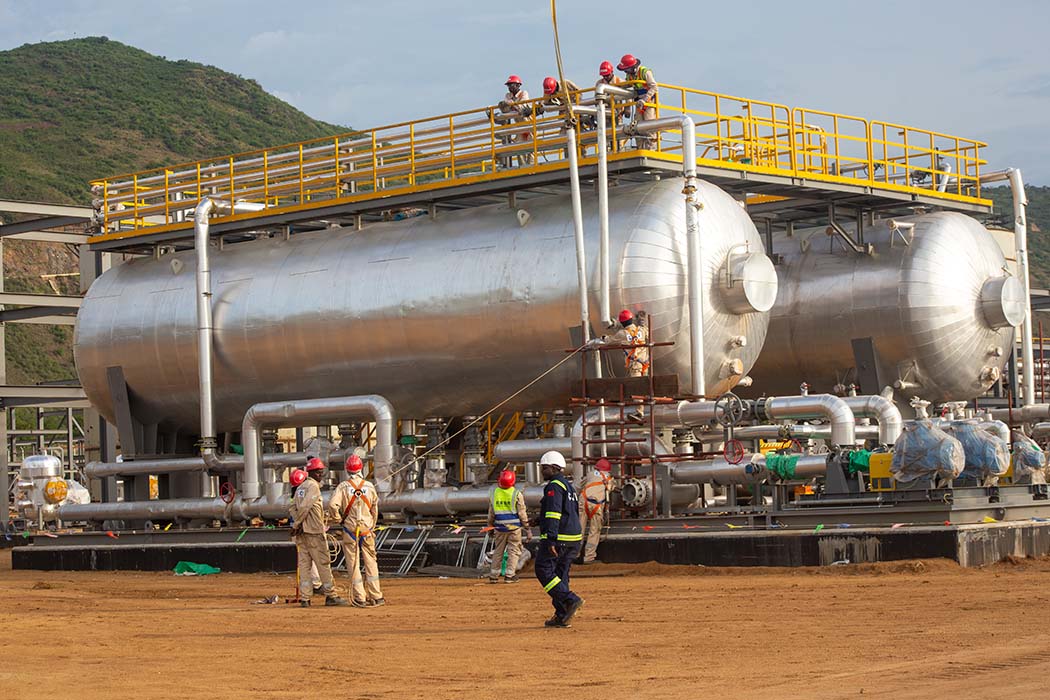
Before the first barrel of oil is pumped out of the bowels, two of the major facilities that require completion are the Tilenga Central Processing Facility, which will produce 230,000 barrels of oil per day at plateau, and the EACOP, which is 92 per cent complete. TotalEnergies holds a 56.67 per cent majority interest in Tilenga, while China National Offshore Oil Company (CNOOC), holds 28.33 per cent and is the operator of the Kingfisher project. The PSAs also indicate that Uganda National Oil Company (UNOC) holds 15 per cent in the projects.
Coercion, backdoor deals
Land acquisition for Tilenga and EACOP has been driven by coercion and backdoor deals, according to documents seen by Vox Populi. A letter authored on 2 February 2023 by the Total General Manager, Philip Groueix, copied to then Executive Director, Petroleum Authority Uganda (PAU), Ernest Rubondo, informing him about the challenges of acquiring land in the Runga and Waki villages, Hoima district, raises concerns about land acquisition, influence-peddling and transparency.
This is the area where Total EP Uganda intended to build a feeder pipeline for the Tilenga facility.
“During the cadastral [mapping of] land and asset inventory surveys, the Tilenga project RAP [Resettlement Action Plan] team encountered a land ownership dispute measuring approximately 13709 acres in Runga and Waaki villages, Kigorobya sub-county, Hoima district,” reads the letter from Philip Groueix.
Philip Groueix said that, “it was resolved that the project records any disputes in writing and all parties involved. In case of a dispute that is in a court of law, when such a court takes a decision [inclusive of a decree], on the same in favour of a rightful landowner.”
The judgement, he further revealed, “should provide clarification about the locus for avoidance of doubt.” Consequently, he recommended that “the involved parties engage each other to amicably resolve the land contestation and thereafter communicate the outcome to the Tilenga RAP team for reference and processing of compensation pertaining to the said land.”
Groueix revealed that if the parties agree, they can enter into a contract with TotalEP, allowing the project to conduct oil and gas activities on the disputed land as long as the compensation funds are deposited into an escrow account pending a resolution of the dispute.
An escrow account is a secure, temporary bank or legal account where a neutral third party, including a bank, holds money or documents during a deal until all agreed conditions are met. Groueix’s letter was couched in diplomatic language. But the promise to seek an amicable solution was later abandoned in preference for a deal underwritten by the overbearing power of government.
TotalEP sought the might of government to expel communities through compulsory land acquisition in Article 26 of the Constitution and the Land Acquisition Act. But the compulsory acquisition did not fulfill the spirit and letter of the law, which requires compensation to be prompt, fair, and adequately paid to the communities that were evicted, as provided in Article 26 (2)(b)(i) of the Constitution.
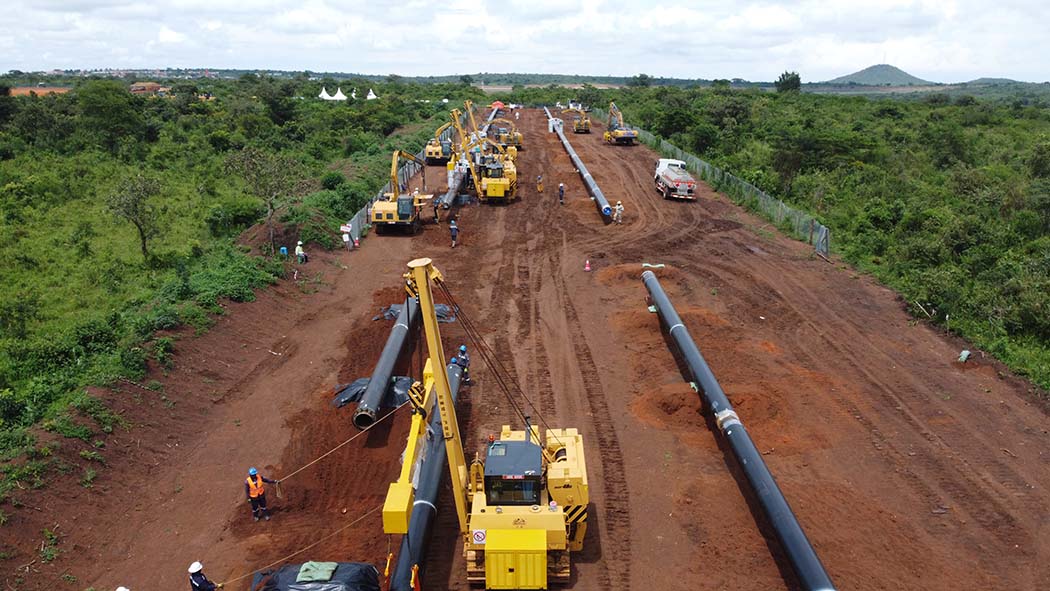
These evictions led by security personnel were brutal and marked by violence, arson, and acts of sexual violence across the villages of Runga, Waaki, and Kapaapi in February 2023. When the impoverished community was expelled, it paved the way for the construction of Total E&P’s feeder pipeline, which was buried across what were previously homesteads and grazing fields.
Voracious appetite for profits
Evictions such as the Kapaapi expulsions are driven by a voracious appetite for profits, as an earlier episode in 2014 attests. Back then, homes totalling about 1051, and sitting on approximately 382.797 hectares, were set on fire in several villages across the Albertine Graben to allow McAlester, an American-based firm, to build an oil waste treatment plant. Evictions have not spared communities across Uganda where the East African Crude Oil Pipeline (EACOP), is buried.
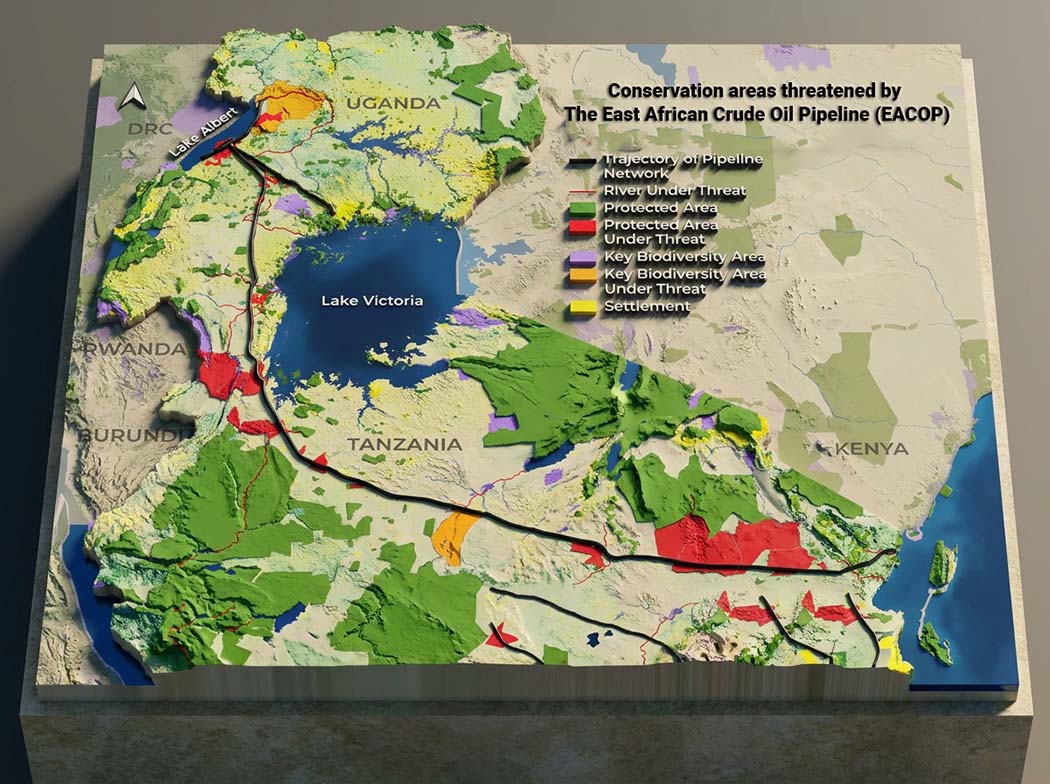
The pipeline, which originates from Kabaale in the Albertine Graben, snakes through Ramsar hotspots and ends at the marine storage terminal at Chongoleani, Tanga District in Tanzania— is expected to be completed by the end of 2026. The pipeline is the latest infrastructure project where multinational firms have a preferential edge in investment.
A piece of legislation enacted by the Uganda Parliament, the EACOP (Special Provisions) Act, granted Total Holdings International B.V., which has a 62 per cent stake in the pipeline, tax holidays and other favourable terms. Both the Uganda National Oil Company (UNOC) and the Tanzania Petroleum Development Corporation (TPDC) each have a 15 per cent stake in EACOP.
Section 5 of the EACOP (Special Provisions) Act provides for a high transportation tariff rate of $12.77 per barrel to move Uganda’s crude from the Albertine to Tanga in Tanzania. This tariff rate, according to the Act, will be adjusted each year starting from ‘the first anniversary of the date of the first commercial delivery of petroleum at the exit point of the EACOP system at an annual increase of 2 percent per annum.’
If the annual rate is adjusted by 2 per cent, the transportation tariff that Uganda will incur for relying on the pipeline could rise from $ 12.77 per barrel to $ 20.54 per barrel by the end of the oil production lifespan.
Several other provisions and schedules of the Act are skewed to favour the largest EACOP shareholder. This includes a tax holiday spanning a decade, which dents revenue collection. The law exempts payment of stamp duty on EACOP-related land transactions. This creates a flawed, selective tax burden as Ugandan citizens are charged stamp duty on land transactions.
‘Ugandans shortchanged’
Watchdog organisations, including the Southern and Eastern Africa Trade Information and Negotiations Institute (Seatini) and Oxfam, have warned that these exemptions are regressive for a country with one of the lowest GDP-to-tax ratios in East Africa of 14 per cent.
“We lost the tax revenue battle a long time ago, from the onset, and the final blow came with EACOP. We tried to fight the tax holiday. In the entire lifetime, we may not get a good midstream income. We tried to do a lot of advocacy, but the companies are very powerful; they can arm-twist,” argues Siraje Magala, the Energy and Extractive Industries Coordinator, Oxfam in Uganda.
Magala says this is not the first time Uganda has lost tax revenues. “In 2018 and 2019, when there was a farmdown [sale of Tullow Oil assets] to Total, the Uganda Revenue Authority had assessed taxes worth $200m, Total threatened to stop oil activities and, in the end, only paid a paltry $14m, so that was the last nail in the coffin.”
In 2013, a UK arbitration court ruled in favour of the Ugandan government against Heritage Oil & Gas, after a protracted tax row over Capital Gains Tax (CGT). This dispute arose after the UK-based Heritage Oil sold its 50 per cent stake in the Albertine to another UK-based firm, Tullow Oil, in 2010. The two oil firms—Heritage and Tullow were the first to discover oil and later sold their stake in the Uganda oil and gas sector.
A fresh controversy emerged in August 2016, when Uganda’s tax body awarded 42 individuals—including its staff and the ministries of Justice, Finance, and Energy—a collective $1,582,721 bonus reward, which was not squeaky clean. Among those who received the cash bonanza was the former Secretary of the Treasury, Chris Kassami, who had passed away three months earlier. Others who received the payments include the former Commissioner General of the Uganda Revenue Authority, Doris Akol, who got $67,013, and her predecessor, Allen Kagina, who earned $55,000; the former Commissioner for Legal Services at the tax body; and the first Executive Director of Kampala City Council Authority, Jeniffer Musisi, who earned $28,000; Ernest Rubondo, the former Head of the Directorate of Petroleum Authority, got $73,549, and Honey Malinga, the former Vice Director of the Petroleum Exploration & Production Department, got $66,865.
A House oversight committee sanctioned to probe the bonus was halted after then Deputy Chief Justice Steven Kavuma granted a dubious interim order halting the investigation. The order set off a firestorm between the Judiciary and Parliament after the Speaker of Parliament, Rebecca Kadaga.
Largely interpreted as an attempt by the Deputy Chief Justice to usurp her powers, the Speaker suspended the House in January 2017 until the Attorney General instructs the Constitutional Court to vacate “the stupid order. Parliament later recommended that the 42 beneficiaries who illegally received the bonus should return the money to the national coffers.
But the recipients declined, arguing that the president had endorsed the bonus. It was not long before the layers of the morally tainted bonus payment began to crumble.
In January 2025, the Uganda Revenue Authority was ordered to pay $187,847,352 to Heritage Oil and Gas over a flawed Capital Gains Tax (CGT )assessment. Justice Susan Abinyo of the Commercial Division of the High Court in Kampala ruled that URA wrongfully imposed a higher CGT of $45m and $148.5m in interest on Heritage Oil after it sold its exploration stake in Uganda to Tullow Oil instead of a lower threshold.
For a country, among the least developed in the world, the $1,582,721 bonus payment doled out to some of the highest-paid civil servants could construct and equip about eight rural health centre IIIs. These facilities are equipped with basic maternity wards, laboratories, and general outpatient rooms.
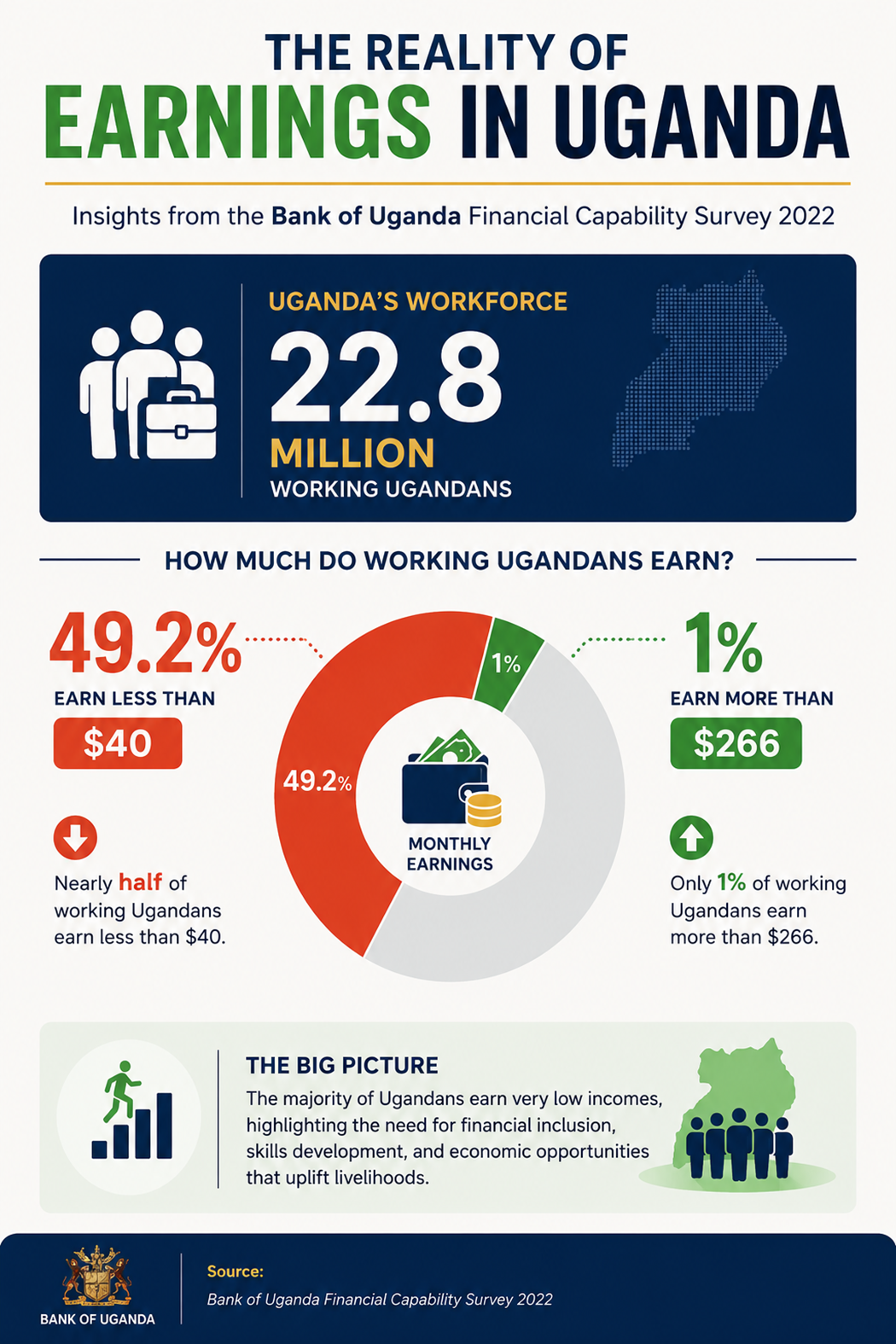
One per cent of the 22.8 million working Ugandans earn more than $266 a month, while 49.2 per cent earn less than $40 a month, according to the Bank of Uganda (BoU) Financial Capability Survey conducted in 2022.
For instance, the bonus payment earned by the former Petroleum Authority chief executive could pay 1,650 citizens to earn a monthly wage of $40.
A 2026 Uganda Bureau of Statistics (UBOS) report, citing data from the 2024 census, indicates that at least 12 million Ugandans out of 45 million are struggling with multiple forms of poverty and deprivation.
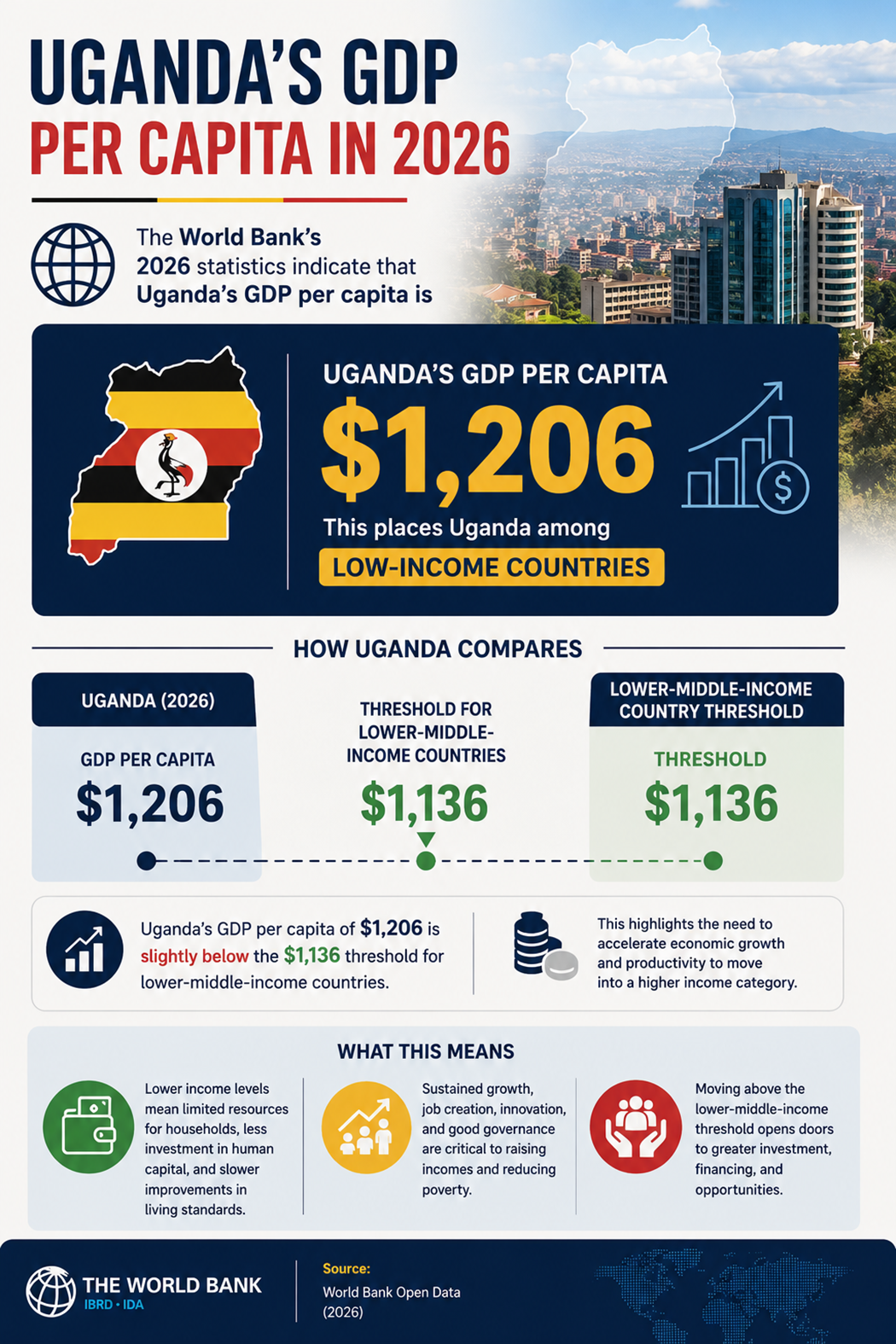
The World Bank’s 2026 statistics indicate that Uganda’s GDP per capita is $1,206, placing it among the low-income countries. The threshold for lower-middle-income countries is $1,136 GDP per capita.
Based on interviews conducted, the average pay for casual labourers in the oil and gas sector is about $150 per month. It is subject to the statutory Pay As You Earn (PAYE) and National Social Security Fund (NSSF) deductions.
Polluting a major water source
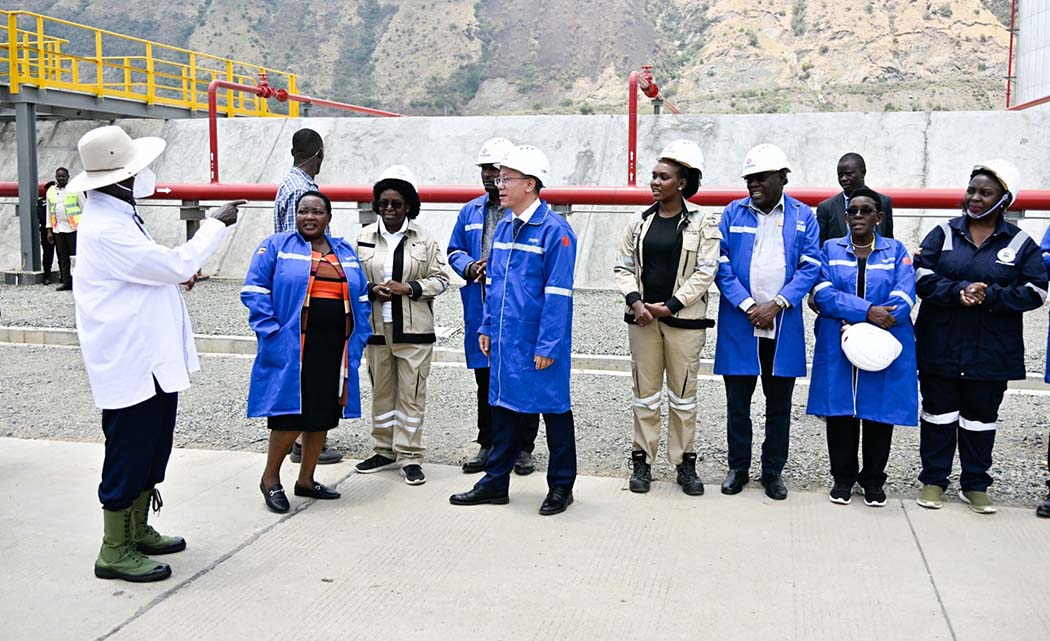
A 2025 study on soil and water contamination, conducted by two Makerere University environmental sciences, ecology and biodiversity academics, Prof. Mnason Tweheyo and Abraham Rutabatina Mwesigye, as well as Emmanuel Kaye—who works with the Directorate of Government Analytical Laboratory—painted a grim picture in some areas of exploration and waste sites across the Albertine Graben. The report highlighted the dangers of oil exploration to flora and fauna. The Kingfisher exploration site, which lies along the shores of Lake Albert and is operated by CNOOC, had the highest levels of soil contamination. It contained elevated concentrations of salts such as sodium, magnesium, phosphorus, potassium, calcium, and metals such as iron, nickel, copper, zinc, and arsenic.
These trace elements are commonly associated with crude oil contaminants, while salts could result from the area’s geology and mineralogy or be by-products of drill water. Soils around the Bugungu petroleum waste consolidation site showed elevated concentrations of iron, nickel, arsenic, copper, and lead—elements associated with petroleum waste that can cause metal food toxicity.
“This may suggest that oil spills occurred at the storage facility or that erosion from water or wind transported the wastes into the surrounding soils,” the study concludes.
Abraham Rutabatina Mwesigye, a lecturer at Makerere University, told Vox Populi that the worst form of contamination was discovered at Bugungu waste management site in Buliisa District. He revealed that samples in Bugungu, which should not exceed 80 milligrams per kg of soil, were exceedingly high at 395 milligrams per kg of soil. “The people who consume food grown here will have health consequences; all elements were increased by petroleum exploration in Kingfisher, which is an exploration site on the shores of Lake Albert.”
Lead in drinking water should not exceed 10 micrograms per litre, but they discovered that in some areas it was as high as 55 micrograms per litre, more than five times the accepted level. The scientists believed that some of these metals could have seeped into Lake Albert and contaminated lake water. The contamination has led to the depletion of fish stock in Lake Albert.
Once lead, which is a heavy metal, accumulates in vital organs, it causes progressive renal failure, chronic kidney disease, and permanent liver damage by causing oxidative stress and cell death within the filtration systems, and cardiovascular disease. Salts can cause plants and grass to wither and affect soils. CNOOC did not respond to the queries regarding the story.
The study discovered that Ngiri and Kigogole oil exploration sites, operated by TotalEnergies in Buliisa District, did not have contaminated soils and water. This is attributed to the safeguards undertaken during exploration. The study conducted ten years after the exploration activities discovered high levels of arsenic, a dangerous chemical in the soils and water.
Once consumed in food or water, arsenic causes acute poisoning, organ damage, and cancer.
A 2024 study by the Africa Institute for Energy Governance (AFIEGO) on the impacts of the Lake Albert oil project on fisherfolk in Buliisa and Kikuube districts has similarities with the findings of the Makerere University lecturers. It revealed that pollution from the oil exploration phase in the Kingfisher project area contaminated lagoons, leading to the disappearance of fish from the lagoons and loss of access to fishing grounds in the Kingfisher project area due to restrictions barring fishermen from accessing some parts of the lake during certain periods.
Other forms of pollution
The research also highlighted other challenges, such as light and noise pollution from the Kingfisher drilling activities that affect fishermen’s fish catch and divers’ health; flash floods or water run-off from the Tilenga Industrial Area that pollutes Lake Albert; and oil-induced population influx that has created competition, resulting in higher prices for fish, thereby affecting fishmongers, the majority of whom are women.
In Hoima District, the Tilenga Feeder pipeline will criss-cross four main rivers—Wambabya, Waaki, Hoima, and Rutoha. These rivers flow directly into Lake Albert, and fears abound that the pipelines could cause pollution.
A pipeline buried on the River Nile bed is meant to transport crude oil from fields in Nwoya District, located north of the Nile in the Albertine Graben, to the Tilenga central processing facility (CPF) in Kasenyi, Buliisa District, located south of the Nile. Tilenga constructed the pipeline using horizontal directional drilling technology, 55.5 metres below the Nile riverbed.
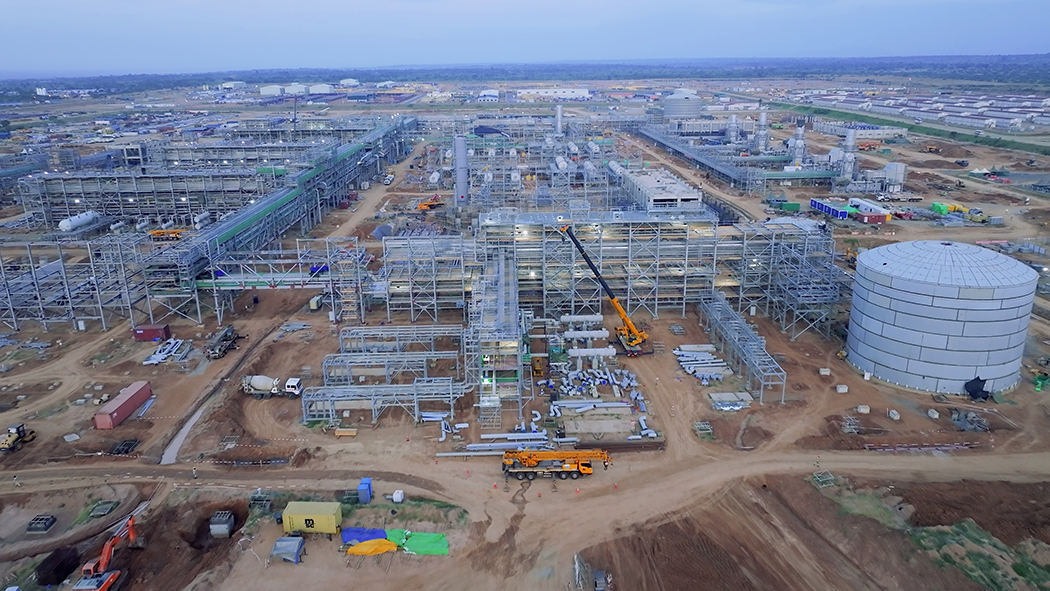
TotalEnergies used silent rigs for wildlife, and NEMA has set a decibel limit to guard against noise pollution. The speed limit around the game parks and reserves has been set at 20kph. Yet problems abound. Compensation for the EACOP remains another sticky issue. Veronica Nakavuma, a widow of the late Dominiano Nsamba, is seeking compensation for 2.5 acres of land in Lukoma village, Kakuuto sub-county, Kyotera District. The land is next to Mutukula town, next to the Uganda-Tanzania border. This parcel was grabbed in 2019 after she rejected half the market price of about $10,589 that the family was offered as compensation.
“My husband Nsamba died in January 2026 before he got his money, and I am the only person trying to make a follow-up and find out if EACOP will pay the UGX40 million ($10,589),” she told Vox Populi.
The widow has been receiving threats from unidentified persons she thinks are linked to the firm in charge of compensation to give up her claims or risk being harmed.
In September 2025, the Masaka High Court Judge, Victoria Nakintu Katamba, ruled in favour of the Attorney General to compulsorily acquire land of 41 PAPs, who were still hesitant to vacate the demarcated oil pipeline route after they rejected compensation for their properties. Despite the judgments and eviction, the PAPs are seeking a re-trial and a fair hearing. Gonzaga Kyakulumbye says his father Daniel Mutale’s land totalling 6.60 acres was allocated for the construction of the pipeline. He says that the evicted have appealed to the Chief Inspector of Courts to have their case heard by an impartial judge.
Some development experts argue that communities in the Albertine Graben should have received comprehensive resettlement rather than compensation. For instance, the British oil firm Tullow compensated communities in Turkana, in the neighbouring state of Kenya, for their pastures, which was not the case when Tullow Oil was operating in the Albertine Graben.
The EACOP snakes through one of Africa’s most biodiverse ecosystems and wildlife expanses. It cuts through one of Africa’s most extensive freshwater systems, connecting the basins of Lake Albert and Victoria, winding down the mangroves on Tanzania’s coast. Earth Insight records show that the pipeline could impact 158 wetlands in Uganda alone, eleven rivers, 44 protected areas, and seven key biodiversity areas, along with Uganda fisheries in Lake Albert, Murchison Falls National Park, Ramsar Sites, and mangroves in Tanzania.
Whereas the astronomical profits will end up in the foreign accounts of multinational oil firms, Uganda’s depleted coffers could be replenished by earnings from the oil and gas sector. But the real cost of the exploration will be felt when the oil is depleted, leaving behind desolate lands, scarred by oil spills and stripped of green landscapes.
This article was produced as part of the Bertha Challenge Fellowship