

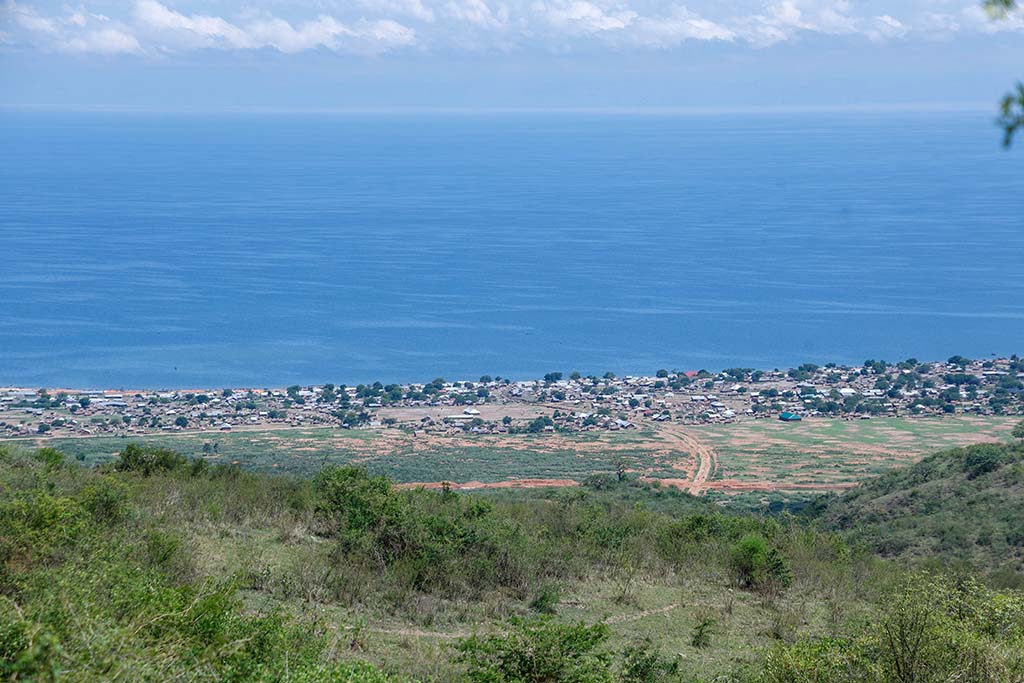

The rural area of Kapaapi has turned into a crucible of violence after 1,000 families, displaced from seven villages located in Bugahya County, Hoima District in 2023, and later resettled on their communal land, live under the constant threat of being evicted.
Though a few families have returned after the former junior lands minister, Sam Mayanja, intervened, they are scared of cartels that often hire rogue Ugandan army, police, and private security firms’ personnel to evict communities from their lands in the oil-rich Albertine Graben.
Emmanuel Mutaizibwa, a 2026 Bertha Challenge Fellow, spent six months conducting an investigation and discovered that highly connected individuals, including the president’s brother, Sedrack Nzaire Nowomugisha, and a UPDF officer at the rank of brigadier, Peter Nabasa, have acquired freehold and leasehold titles, respectively in this area. Nzaire’s 75-hectare piece of land surfaced in a search report conducted on the land registry Masindi District Zonal Office on March 26, 2026, which was issued by Yvonne Mary Amutuhaire, a Registrar of Titles. However, Nzaire is not mentioned among those who carried out the evictions and his land acquisition does not infer any wrong-doing.
This intricate web of power and profit has leveraged its proximity to the state and transnational oil companies to gain access to large chunks of land in the Albertine region through ruthless tactics such as arson. Most of this land is near large oil infrastructure such as the Tilenga central processing facility.
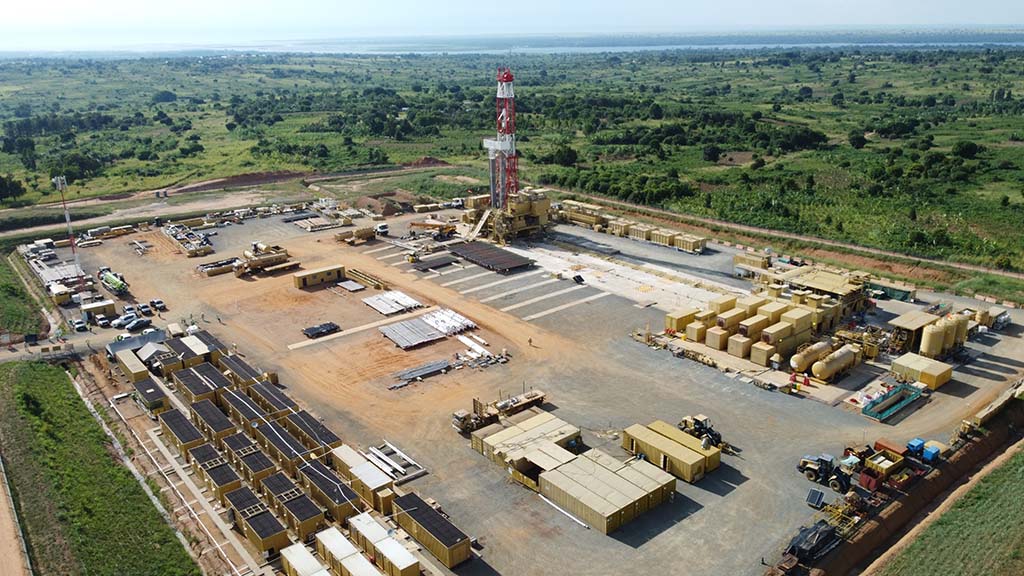
A letter in the possession of Vox Populi, which was authored in 2023 by the General Manager, TotalEnergies Exploration and Production, Philippe Groueix, revealed that the oil firm has an equitable interest in 1030 hectares where it proceeded to construct a 96-km feeder pipeline adjacent to the homes of the communities in Kapaapi. The feeder pipeline is a major component of the Tilenga project, a major oil facility, which consists of six oil fields, the drilling of around 400 wells from 31 locations, and a central processing facility meant to process crude oil. It also consists of over 170 kilometres of flow lines and a lake water abstraction system. The Tilenga project is jointly owned and operated by TotalEnergies in partnership with the China National Offshore Oil Company (CNOOC) and the Uganda National Oil Company (UNOC). The production of crude oil at Tilenga is planned to reach 230,000 barrels of oil per day at peak, and the facility could produce an estimated 1.4 billion barrels of crude oil for at least 20 to 30 years, bringing in a total revenue of $60bn. The International Monetary Fund (IMF) estimates that Uganda has the fourth-largest oil reserves in Africa.
Based on several interviews conducted with locals and high-profile individuals, the evictions have been precipitated by the expected exploration of the Kasuruban block, which straddles Kapaapi and extends to the districts of Buliisa and Masindi. The Uganda National Oil Company was issued a licence in the exploration block, which has an estimated 600 million barrels of crude oil, bringing the total estimate to 6.5 billion barrels of oil.
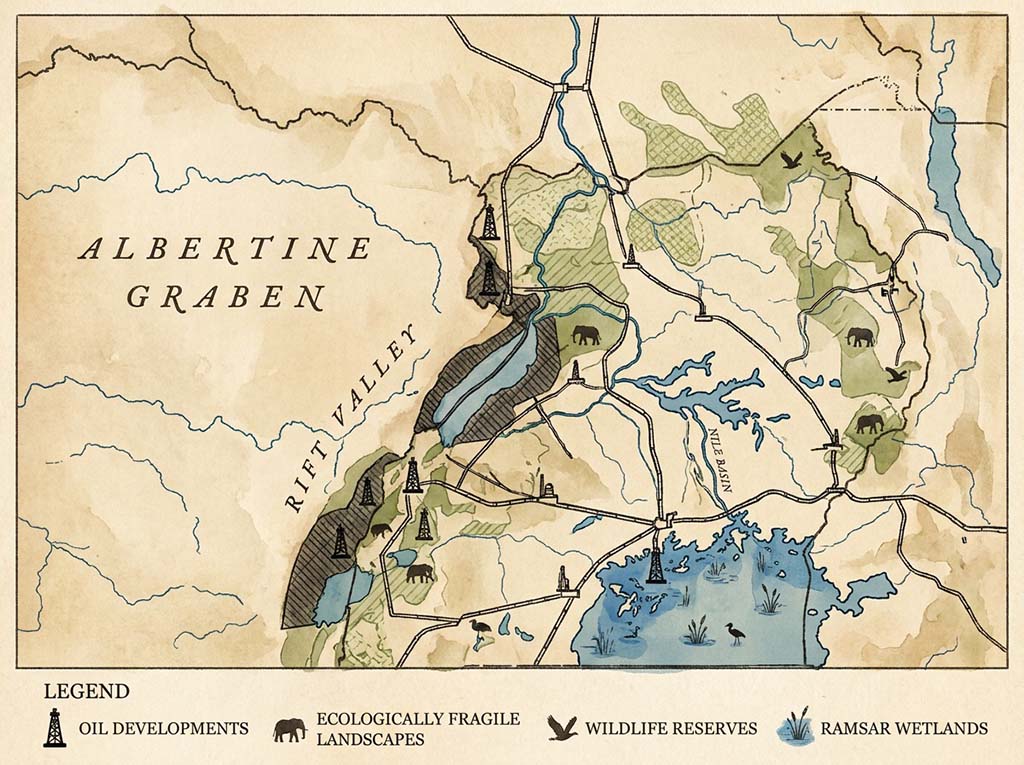
The Albertine Graben, a geological cradle, races across the rugged cliffs of the East African Rift Valley and Lake Albert, a transboundary freshwater lake that hugs the Uganda-Congo border. The area, which possesses 6.5 billion barrels of oil, expands inwards across the districts of Hoima, Kikuube, Buliisa, and Ntoroko in western Uganda, and Nwoya district in northern Uganda.An estimated $12.3 billion, the largest Foreign Direct Investment (FDI) in the country, has cumulatively been spent by oil firms such as the British firm Tullow Oil and Heritage Oil & Gas, which later sold their interests to TotalEnergies and China National Offshore Oil Corporation (CNOOC), since commercial oil exploration commenced in 2006.
Oil’s poisoned chalice
The first assessment of the oil and gas potential in Uganda was undertaken during the colonial era by a British geologist, E.J. Wayland, who documented hydrocarbon occurrences in the Albertine Graben in the 1920s. This was followed by drilling of shallow wells around Butiaba and Kibiro localities, with the deepest well called Waki-B-1 drilled in 1938. As a result of the Second World War and later the Museveni-led guerrilla war between 1981 and 1986, oil exploration activities were halted. In 2006, the Jersey-based Heritage Oil and Gas Limited and the Australian-based Hardman Petroleum and Energy Africa discovered commercial quantities in the Albertine Graben. Light flickered across the dark expanses, momentarily lifting the spell that had cast a pall on this marginalised community, which suffered the brunt of colonialism.
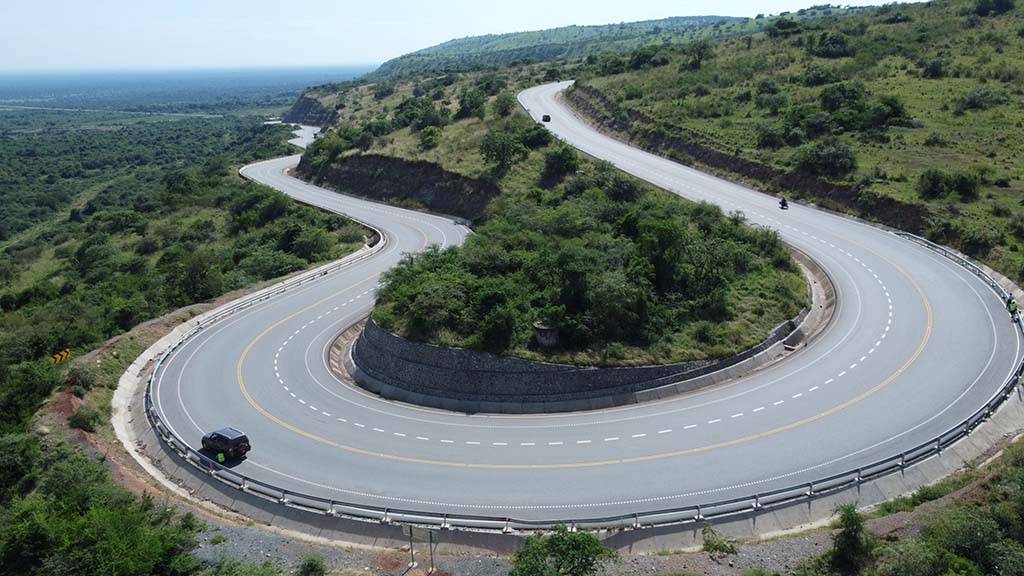
Red-ochre murram roads turned into tarmacked oil arteries—buildings emerged from the rubble, and an international airport to airlift heavy equipment was constructed, breathing new life into this area. The roads were built by the Ugandan government through loans acquired from China’s Exim Bank and commercial banks such as Standard Chartered Bank and Citibank, while the airport is funded largely by UK Export Finance (UKEF). Today, the Albertine Graben in Bunyoro is the heartland of Uganda’s economic progress as the country prepares to pump its first barrel of oil in 2027. The investment in oil and gas spearheaded by these transnational firms, whose footprint expanded in Uganda, today serves as a springboard meant to lift the country’s Gross Domestic Product (GDP) from the paltry $60bn—placing it amongst the 40 Least Developed Countries (LDCs) in the world—to the lofty heights of a $500bn economy by 2040.
Tullow Oil, which entered the Ugandan oil market in 2004, later acquired the assets of Hardman Resources for $1.1 billion in 2007 and Heritage Oil for $1.45 billion in 2011. In 2020, Tullow exited the market richer after receiving $3.475 billion in revenues for the sale of its Ugandan oil blocks to TotalEnergies and CNOOC. In 2015, a landmark ruling by the International Court of Arbitration in London compelled the Australian-based Heritage oil firm to pay the Ugandan government $434 million in capital gains tax after its assets were purchased by Tullow in 2011.

Much of this crude will be transported through the 1,443 km East African Crude Oil Pipeline (EACOP), which will snake through Kabaale in Hoima district in Uganda, across the biodiverse areas of the Albertine, to the Chongoleani Peninsula near Tanga port in Tanzania. The pipeline is jointly financed and owned by the governments of Uganda and Tanzania, and TotalEnergies and CNOOC. It will have a peak capacity of 246,000 barrels per day.
Locals believed that the discovery of the black gold could end abject poverty in the sub-region. But they have long been forgotten by the government, which prioritises elite interests. Instead, the clamour of global oil firms, the government, and local cartels to line their pockets with fossil-fuel profits opened another dark chapter in the area where brutal evictions have left a trail of despair. Social services in the Albertine are underfunded. Hoima Regional Referral Hospital, which serves eight districts, is crippled by chronic understaffing, frequent drug stock-outs, a prolonged lack of a functional X-ray machine, and severely constrained infrastructure. In a country where the GDP per capita stands at a paltry $1,476, critics fear that these oil revenues could be used to entrench the patronage networks of Museveni’s imperial presidency, which has been in power for the last 40 years.
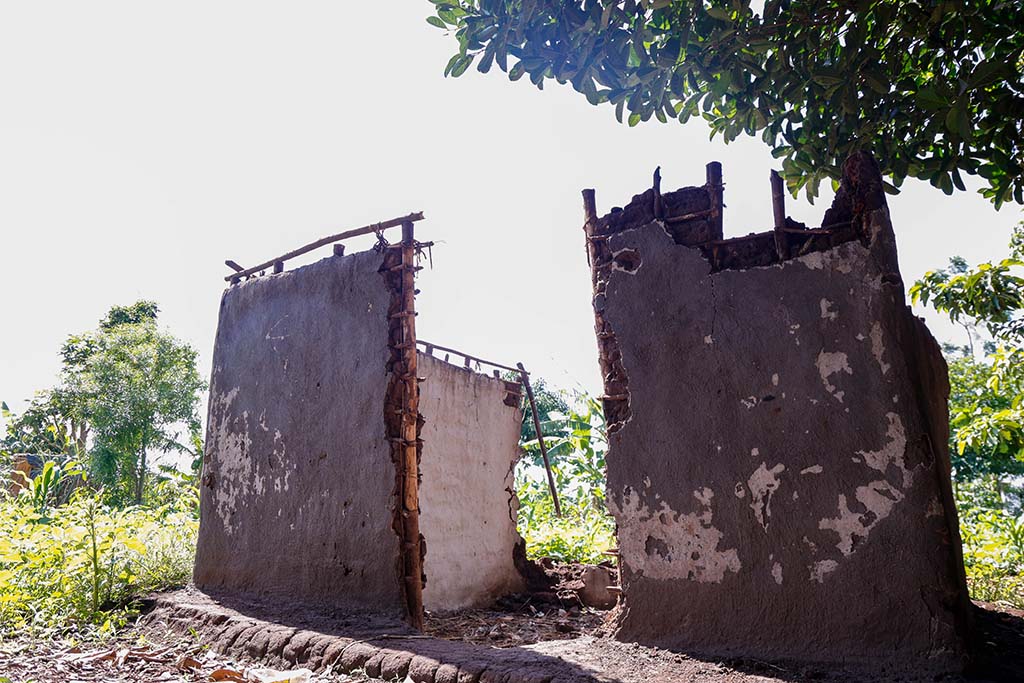
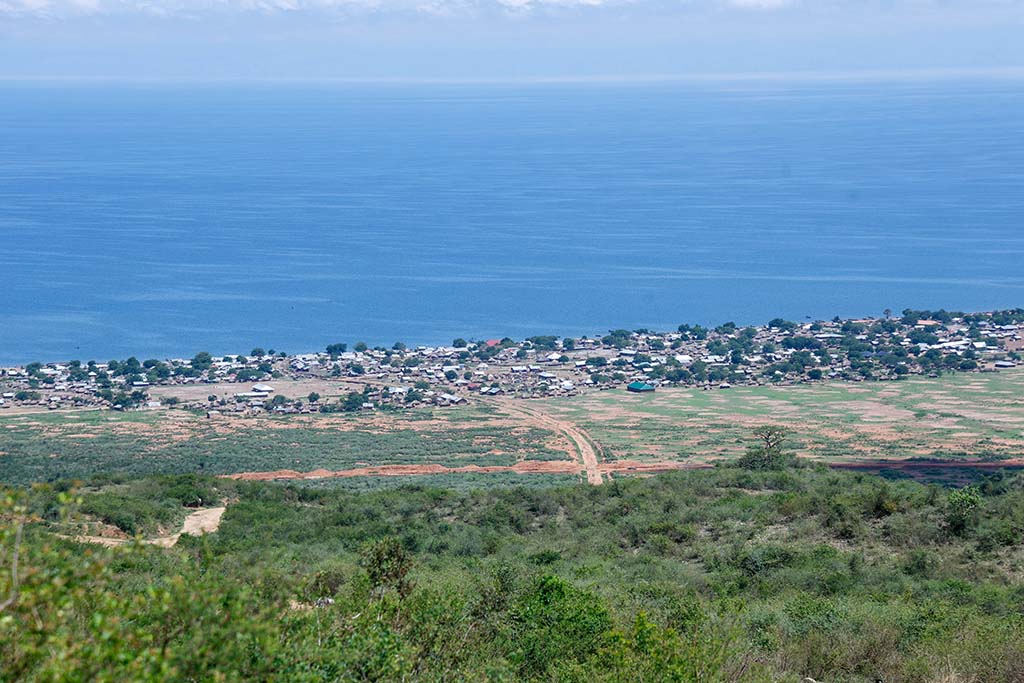
Across the month of May, I visited Kapaapi, a rural area dotted with mud and wattle structures. The resentment and angst was palpable in the area that squats across Bugahya County in Hoima District. Earlier, on February 10, 2023, a coterie of security personnel consisting of the Ugandan army, Uganda Police, who were identified by their military attire, and guards from Magnum, a private security company armed with assault rifles, bows and arrows, raided this area and carried out an eviction.
Among those identified by eyewitnesses were former District Police Commander Jackson Patrick Bogere and the deputy Resident District Commissioner, Michael Kyakashari. They raided the Kapaapi area in vehicles whose numberplates were UG/425C, UBA 764/S and UAP 445/J, hurled teargas canisters and set homes ablaze in a rampage that lasted three hours, resulting in the eviction of 1,000 families across seven villages in Kigorobya sub-county, including Runga, Kapaapi South, Kapaapi North, Kapaapi Central, Waki North, Waki South, and Kiryateete, Hoima District. These details are part of the evidence in the three lawsuits filed at the Hoima High Court, filed in 2023 and 2026. The evidence is also captured in the letter authored by the former Lands minister, Sam Mayanja, who, in June 2026, was appointed as Attorney General, which is addressed to the chairperson of the Uganda Human Rights Commission, Margaret Wangadya. The eviction resulted in abuses such as arson, torture, gang rape, and the destruction of property and hundreds of homes across seven villages. Vox Populi is in possession of the pleadings and the gory images, which are marked as exhibits in these lawsuits. Vox Populi has also seen a video shot by a cellphone where men in military fatigues returned to Kapaapi about a fortnight ago and were threatening to evict the families that had resettled in the area.
Nowhere to go
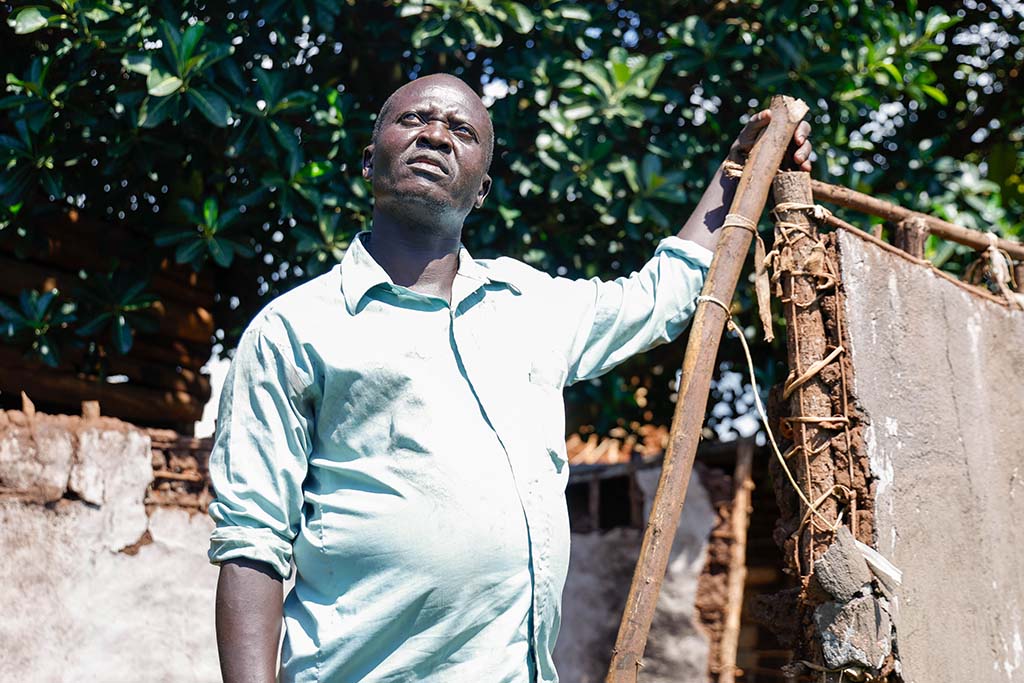
“I came here in the year 2000 with my family, and we continue to live in fear, and sometimes we have to sleep in the bushes at night, and we are haunted by the evictions that happened in 2023,” said Samwiri Kataaza, whose cracked voice betrayed fear and trepidation.
A fortnight before the raid on their village in 2023, Kataaza and several others were abducted. They were then arraigned before the Chief Magistrates Court in Hoima on fabricated charges such as threatening violence and remanded to prison.
“They [soldiers and police] raided our homes while some of us were in prison in the dark of the night. They set homes on fire, raped women, and stole livestock, and others were eaten by soldiers. My home had iron sheets. One of the invaders keeps his livestock in my house. We have returned to the land, and they are threatening to harm us,” Kataaza, who keeps a few livestock and has a garden of maize, told Vox Populi.
This tactic, where community leaders are imprisoned, has often been used during other evictions, including the 2014 evictions in Rwamutonga, in Hoima district, and documented by several human rights organisations, including Global Rights Alert. The men imprisoned were compelled to hand over their land under duress and pay about shs 7million ($1,854) to gain their freedom. Those who did not comply were imprisoned for six months and later released on bail. Uganda’s laws provide that a contract reached under duress is void.
The victims of the evictions, including women who were raped, reported these incidents to the nearby Kigorobya police post, but the officers referred them to Kitoba police station. When the victims huddled inside Kitoba Police Station, they were threatened with arrest. The women refused to budge, and a case, whose police file number is GEF003/2023, was registered.
Some locals, including Kataaza, returned to their land situated in Bugahya County, Block 1, Plot 9, measuring 926.25 hectares. This was only after the intervention of Sam Mayanja, the immediate past junior lands minister, who has been outspoken against rampant evictions across the country. Before being appointed as the attorney general in May 2026, Mayanja visited Kapaapi shortly after the evictions in January and February 2023. What he witnessed was so moving that he issued a presidential directive and sanctioned the arrest of those accused of masterminding the evictions. The minister listed a senior Uganda Peoples’ Defence Forces (UPDF) officer, Brig. Peter Nabasa, who has served as the deputy commander of the First Infantry division in the Ugandan army, and others who participated in the evictions, including William Ndahura Gafayo; Asiimwe Byangire; Oromo Ruzira, the former Hoima district police commander; Jackson Bogere; and the assistant resident district commissioner of Hoima district, Michael Kyakashari. These instructions to arrest these officers are part of the letter he authored, which was addressed to the Uganda Human Rights Commission (UHRC) in July 2025. The minister fingers two other UPDF officers—Capt Rodgers Karamagi and Lt Rodgers Kandole, who are accused of participating in the raids.
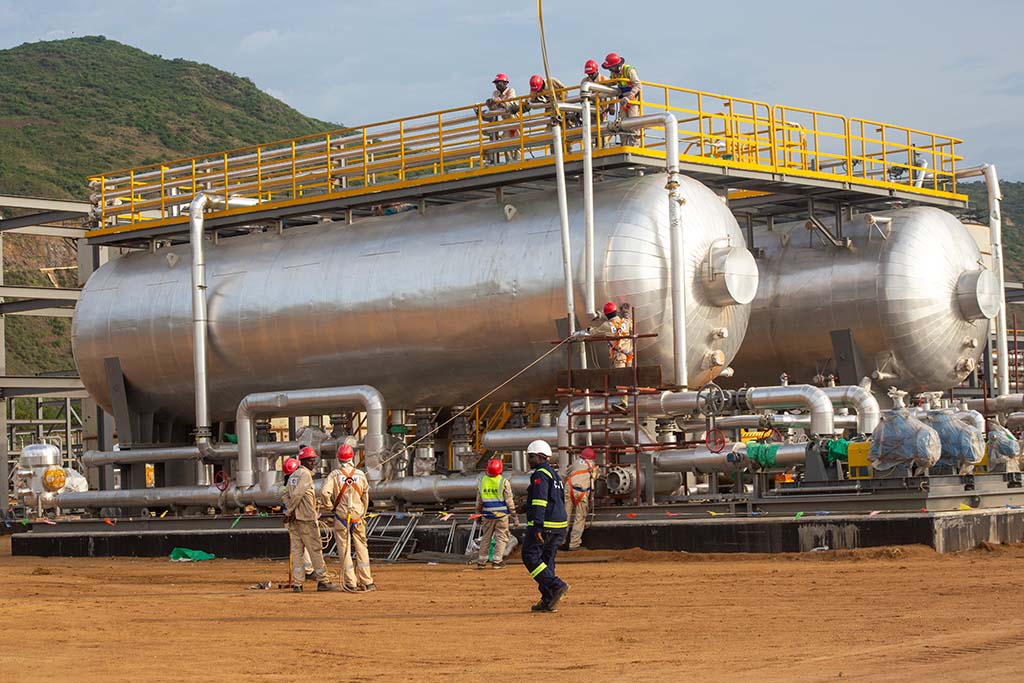
Kataaza’s testimony sums up the scale of suffering endured by thousands of families evicted from the Albertine over the past two decades. Since the onset of commercial oil exploration, raids involving security personnel have been a familiar sight, which has led to a recurring pattern of violence across Bunyoro’s districts, including Hoima, Kikuube, and Buliisa, and specifically in areas where oil firms intend to conduct oil exploration activities and construct infrastructural facilities. In February 2019, more than 500 families were brutally evicted from their land in two villages in Kyabisagazi, Kigorobya sub-county, Hoima district, which is near Kapaapi and strategically located in the oil and gas belt. The brutal eviction conducted by armed men in uniforms similar to those of the Uganda Peoples’ Defence Forces and the anti-riot police resulted in the death of four toddlers.
In March 2019, then Speaker of Parliament, Rebecca Kadaga, appointed a select House committee to probe the eviction and violence, which was meant to be completed in 45 days. The report was shelved and has not been presented to the House plenary for debate.
Rwamutonga sub-county in Hoima District is another area that has experienced violence. About 200 families in 2014 were evicted by the Uganda Police Force alongside armed private security guards hired by businessman Joshua Tibagwa, who leased a 500-acre piece of communal land to a US-based oil waste management firm, McAlester. In 2015, the Masindi High Court judge, Simon Byabakama, ruled that the eviction was unlawful on the basis that during the evictions, there was an undecided suit filed in court to determine the ownership of the land. The judge awarded those evicted a sum of $13 million.
An impasse
Most of the land at the centre of the conflict, measuring about 3,000 hectares and spread out across seven villages, was owned by the family of the late Tito Lukyalekere Byangire (I mention the name of Tito Lukyalekere Byangire because the land dispute partly revolves around his family, which originally owned the land where the evicted families lived. About 28 family members have separately written a petition to the president’s advisor asking for the prosecution of those involved in the eviction, which is part of the chain of evidence. Vox Populi understands that part of the land was originally occupied by herdsmen and farming communities. Out of 32 children of the late Byangire, 28 have authored a petition supporting the prosecution of those involved in the eviction. Tito Byangire’s family’s letter is addressed to Phiona Barungi, a senior special aide to the president. The letter corroborates graphical details of the raid and mentions some of the violent acts locals were subjected to, including rape and arson.The letter also implicates Brig. Peter Nabasa, a senior UPDF officer; Jackson Bogere, then Hoima District Police Commander; and Michael Kyakashari, the deputy Resident District Commissioner, as the masterminds of the evictions. The others adversely mentioned in the petition include Aston Muhwezi, Anthony Buhuzya, Asiimwe Byangire, Nathan Kiiza, and Ndahura William Gafayo, who are accused of mobilising security personnel to evict the locals. They are also listed as registered proprietors of land in the land registry of the Masindi District Zonal Office.
Despite calls to have them arrested, Bogere was redeployed and serves as the district police commander of Pader district, Northern Uganda, and Kyakashari was deployed to Kabale district in Southwestern Uganda, where he serves as deputy resident district commissioner.
Mayanja says that immediately after he departed the restive area, Brig. Nabasa redeployed UPDF and Police officers in Kapaapi. However, Nabasa, who spoke to Vox Populi in May 2026, revealed in an interview that he leased part of Tito Byangire’s land ten years ago. This land is adjacent to the TotalEnergies feeder pipeline, and usually such acquisitions by oil firms push the value of land to rise. “I found half of the title was occupied by the community, and half of it was for the family [Byangire] without locals. I have been on the land for more than three years,” he revealed, adding.
Brig. Nabasa claims that the former junior lands minister failed to resolve the conflict. “The problem was complicated by […] Mayanja, who tried to correct the mistake he had made earlier. I have never participated in evictions. The court did not see the evidence, and I still have six years of my lease pending, and I have no problem with the family members; these people are there illegally, and they came in 2025. I have a garden of maize; they harvested all my maize. They have stolen my herd of 100 cows.”
A gory horror
Brig. Nabasa grazes his cattle on 700 acres of land, which he claims he leased out of 1,235 hectares belonging to the Byangire family. The Byangire family parcelled out another 1,050 acres to kibanja holders who have occupancy rights but do not hold a registered title. They are protected by the Constitution and the Land Act and cannot be evicted without a court order, and they possess the right to use, sell, inherit, or formalise their occupancy on registered land. Minister Mayanja’s order to resettle the families has been supported by the commander of the UPDF Field Artillery Division, Maj. Gen. Dan Kakono, whose soldiers are offering protection to families that were previously evicted. Women in this area, subjected to horrendous torture and sexual abuse during the eviction raids, carry invisible scars. While speaking on condition of anonymity, the doctor who treated these women confirmed that they were still experiencing trauma when he examined them in 2025. Five women are willing to testify in court, but others choose to remain silent as a result of the stigma associated with rape and threats from the perpetrators of this crime.
The Deputy Inspector General of Government, Patricia Achan Okiria, on January 15, 2024, filed a petition before the Uganda Police Professional Standards Unit (PSU) calling for the investigation of the former Hoima District Police Commander of Hoima, Patrick Bogere, on allegations of abuse and improper misconduct. The letter, which is in the possession of Vox Populi, states that “In February 2023, the District Police Commander [DPC], together with the assistance of armed goons, invaded seven villages located in Kapaapi, Hoima, at night, tied up several women, and gang-raped them before evicting them from the land. Consequently, the affected women reported the matter at Hoima rural police station, where Bogere Jackson is the DPC. When the victims followed up the matter, the DPC threatened them with arrest and blocked them from making further appearances at the police station.”
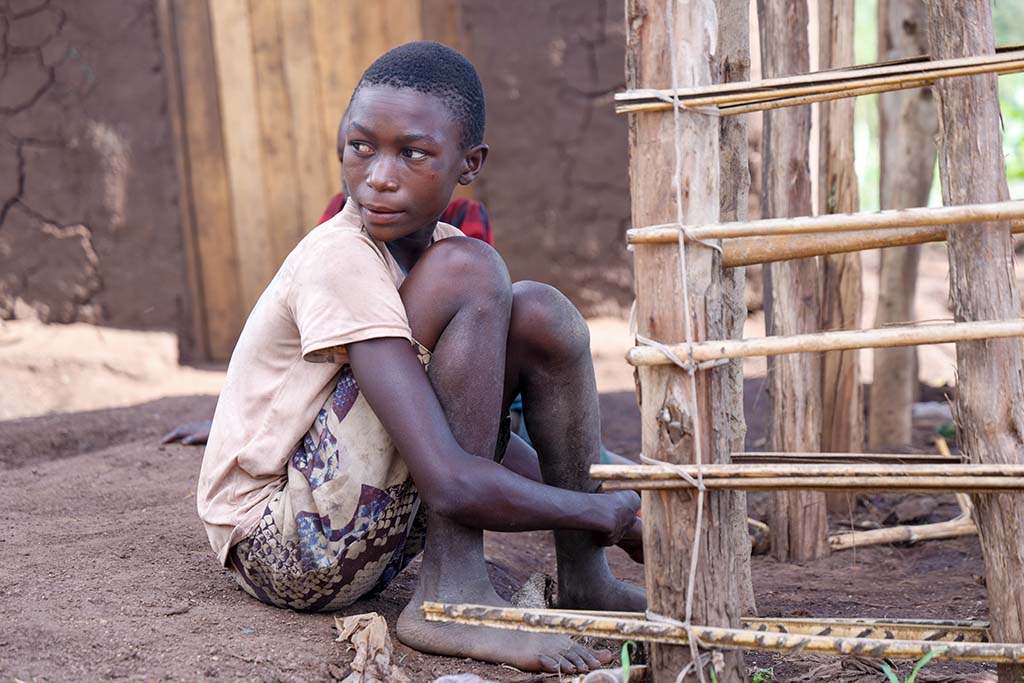
Some of the women who encountered violence during the evictions, including two rape victims, provided these testimonies. Unknown thugs came together in large numbers with police and Magnum security guards. I was two months pregnant, I fell on a stone and started bleeding, and I had a miscarriage and lower abdominal pain. I am a mother of nine, and we often sleep in the bushes with the children. There is no honour in that if a family member passes away, their corpses are thrown into the bushes,” revealed one of the women who was examined and whose identity was concealed for fear of reprisals.
Incidents of rape
Another victim and mother of eight, whose house was torched and livestock stolen, claimed that her husband was imprisoned and her children are out of school.
“I was raped by two people who covered my eyes with a cloth. I fell while running, and currently I suffer from severe back pain. My oldest son, who was 17 years old, was shot in the shoulder. We now live like destitutes in [the neighbouring] Buliisa district,” she lamented without disclosing her identity.
“I was five months pregnant, and I am a mother of five. I was spared from being raped, but they took my livestock, including a cow, which was roasted and eaten,” revealed another victim who was attacked on Feb 10, 2024, after her husband fled to hide in the bushes.
Another victim, who was three months pregnant, was awoken by noises and silhouettes of soldiers. “She lost the pregnancy and got retained products of conception, leading to a dilation and curettage [a minor surgical procedure used to open the cervix and remove tissue from the inner lining of the uterus],” reads the summary of a medical report.
She claims that her children were beaten and hospitalised, and “one of the attackers was identified as the Local Council 1 chairperson Michael Oketta, Ndahura Gafayo, who was dressed in a camouflage uniform and was armed with pangas and guns.”
Her children’s identity cards, academic records, and a motorcycle were incinerated in the fire. The victim, according to a medical report, “developed peptic ulcers, insomnia, high blood pressure and paranoid delusions”.
On 10 February 2023, at about midnight, while asleep, soldiers and police entered another woman’s house. She was assaulted and taken to the back of the house, and while pregnant, she was raped, and her house was torched. A medical report reveals that “she developed a urinary tract infection and experiences pain in the pelvic area and back and suffers from bouts of insomnia.”
At 1 a.m., the young woman noticed that their houses were ablaze. “The door was hit, and it fell in and injured a baby. My mother-in-law was in the house and was severely beaten. I was seven months pregnant. I was pushed out of the house naked; I got severe lower abdominal pain and vaginal bleeding, and I was abducted and taken to an unknown place with my four children. All my livestock were stolen, and my children are out of school while my husband was imprisoned for five months.”
Several incidents of rape have been chronicled during evictions in the Albertine Graben. About four women claimed that they were raped in 2014 during evictions in Rwamutonga, Hoima district, when 200 families were evicted to pave the way for the construction of an oil waste treatment plant by McAlester, a US-based firm.
Arinaitwe and Company Advocates, a law firm based in Kampala, has, between 2023 and 2026, filed three separate suits in Hoima High Court on behalf of the evicted families. One of the lawsuits is a public interest litigation which is seeking to hold TotalEnergies and the government of Uganda vicariously liable for the abuses the victims suffered during the eviction.
Peter Arinaitwe, the lawyer for the evicted communities in the seven villages of Kapapi, says that “our legal representation of the victims has also come at a high personal cost. We have experienced what we believe to be attempts on our lives, persistent surveillance of our movements, raids on our homes, and intimidation by unidentified individuals in suspicious vehicles. These incidents have created a climate of fear and insecurity for us and our families.” He said the case has been deeply traumatising. “Since May 2023, when we intervened to secure bail for more than ten community leaders who had been imprisoned on what we believe were fabricated charges, we have witnessed and documented disturbing accounts from the victims. These accounts include allegations of nighttime attacks on villages, destruction and burning of homes, gang rape of women and girls, and the forcible eviction of residents from their ancestral land. Many of the affected families have remained homeless for more than two years and now face renewed threats of eviction.”
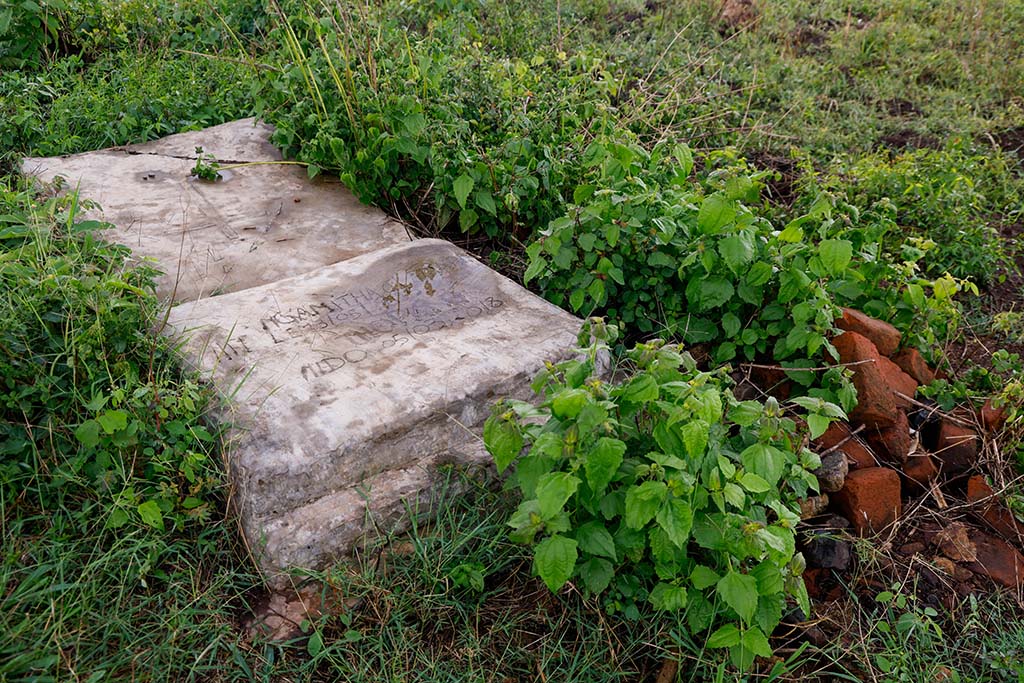
There are several other incidents of land grabbing which have been recorded in the Albertine Graben in the last two decades and have resulted in protracted legal disputes in Hoima and Masindi districts. They include a land-grabbing incident in Kiryamboga village, which is nestled in the valley between the shores of Lake Albert and the escarpment in Buseruka sub-county, Hoima District. Individuals, namely Edward Asiimwe, who was the secretary of the Hoima District Land Board, Kiiza Kenneth, the former chief administrative officer of Hoima District, and the former assistant chief administrative officer of Hoima District, Kyamanywa Mugenyi, dubiously parcelled out this land, which was under customary ownership, into six freehold titles and sold it to Tullow Oil in 2012. Without the consent of the locals, Tullow Oil unlawfully erected rigs and fences at Kiryamboga village in Bugahya County after purchasing the land from those who had fraudulently created titles on the communally owned land. Another high-profile land-grabbing incident happened in Bikongoro village, Buliisa district. With the discovery of potential oil wells in Bikongoro village, Tullow Oil approached residents of the community in 2010, seeking to carry out further oil exploration activities in the area. 12 families agreed to deal with a notorious land grabber, Francis Kahwa. In March 2013, supposedly upon the request of Kahwa’s lawyers, the court clerk of Buliisa Magistrates Court approached Balyesiima Biddo, who was part of the 12 families, with an admission of facts document as well as a consent judgement. Although Biddo is illiterate, the clerk tricked him into approving the documents with a thumbprint, which stated that Kahwa was the sole owner of the land and that Biddo had unlawfully trespassed on Kahwa’s land. Biddo was arrested and served a seven-month term in prison.
A hall of mirrors
The land that Asiimwe Byangire leased to Brig. Nabasa was the subject of a legal dispute filed in 2021 before the Masindi District High Court at the time the senior army officer acquired it. Asimwe Byangire, as the plaintiff, had sued the local community in Kapaapi for trespass.
The petitioners claimed that, “As the court process is still ongoing, Asiimwe Byangire, who is the plaintiff, and Brig. Nabasa have decided to come and force the residents to agree and sign a [consent agreement] document to divide the land of the four villages into two parts without any written document from the court allowing them to do so.”
The locals claim that Asiimwe Byangire sought to present a forged document purporting that the defendants had entered into a consent agreement with him. It reads further, “The second part, i.e., the western part [Waaki North and Kiryatete Rukola], will be given to Brigadier Nabasa to pay back his loan, so the residents of the western part will be chased immediately without any compensation.” The locals claim that Brig. Nabasa acquired the 700-acre leasehold after Asiimwe Byangire failed to pay a loan he acquired from the army officer. Michael Oketta, the Local Council 1 chairperson, who is among those accused of conducting the raid, denied taking part in the evictions. “As chairperson, I cannot participate in evictions because it’s against the law; those are false accusations against God and me, and I forgive them.”
Aston Buzaya, who is adversely named, says he did not participate in the evictions. “There are two plots. I belong to plot 9, block 1, Kapapi. There were no evictions; we have tenant agreements, and we only stopped renting our land to [locals]. They [locals] went away and later connived with land dealers who advised them to come back. These are pastoralists; they mobilised those who had left. They include Deus Mugume from Nakaseke and others from Zirobwe; they wanted to grab our land. This plot, which is neighbouring our land, had a dispute, and a petition was filed with the district security committee, and it was agreed that the land should be divided, and squatters on the land were given one side and the landlord another side.” Buzaya claims that out of 2,400 acres, squatters were granted 1,000 acres.
Rodgers Mbabazi, the newly appointed RDC, says, “We have deployed security on the land to protect both parties, and we await the final resolutions. We are working closely with different authorities, including those above our level, to handle the matter. For instance, the Chief of Defence Forces [Gen. Muhoozi Kainerugaba] is involved through the deputy, Lt Gen. Sam Okiding, and most of these stakeholders are actively involved in order to get an amicable solution.”
The director for complaints, investigations & legal services at the Uganda Human Rights Commission (UHRC), Pauline Nansamba Mutumba, told Vox Populi that UHRC’s officers in Hoima district met the complainants, but they were not willing to cooperate and preferred to wait for the decision of courts of law. “We agreed that the office of the resident district commissioner would take the lead. I consider it ongoing. We could not interfere because of the sub judice rule, but we did offer to mediate.”
This article was produced as part of the Bertha Challenge Fellowship